Written by Jeremy Souffir Founder, JTS Tech Services

Gartner published a number at the start of July that's worth ten minutes of your attention: up to $234 billion of enterprise application software spending is at risk between now and 2030, amounting to roughly 20% of what companies spend on SaaS. The cause isn't a recession or a competitor. It's that AI agents do work across several systems at once, so fewer humans sit in front of each interface — and almost every business application on earth is priced per human sitting in front of it. Gartner calls the effect agentic arbitrage. If you buy software, it is the strongest negotiating position you've had in a decade.
What is agentic arbitrage, in plain English?
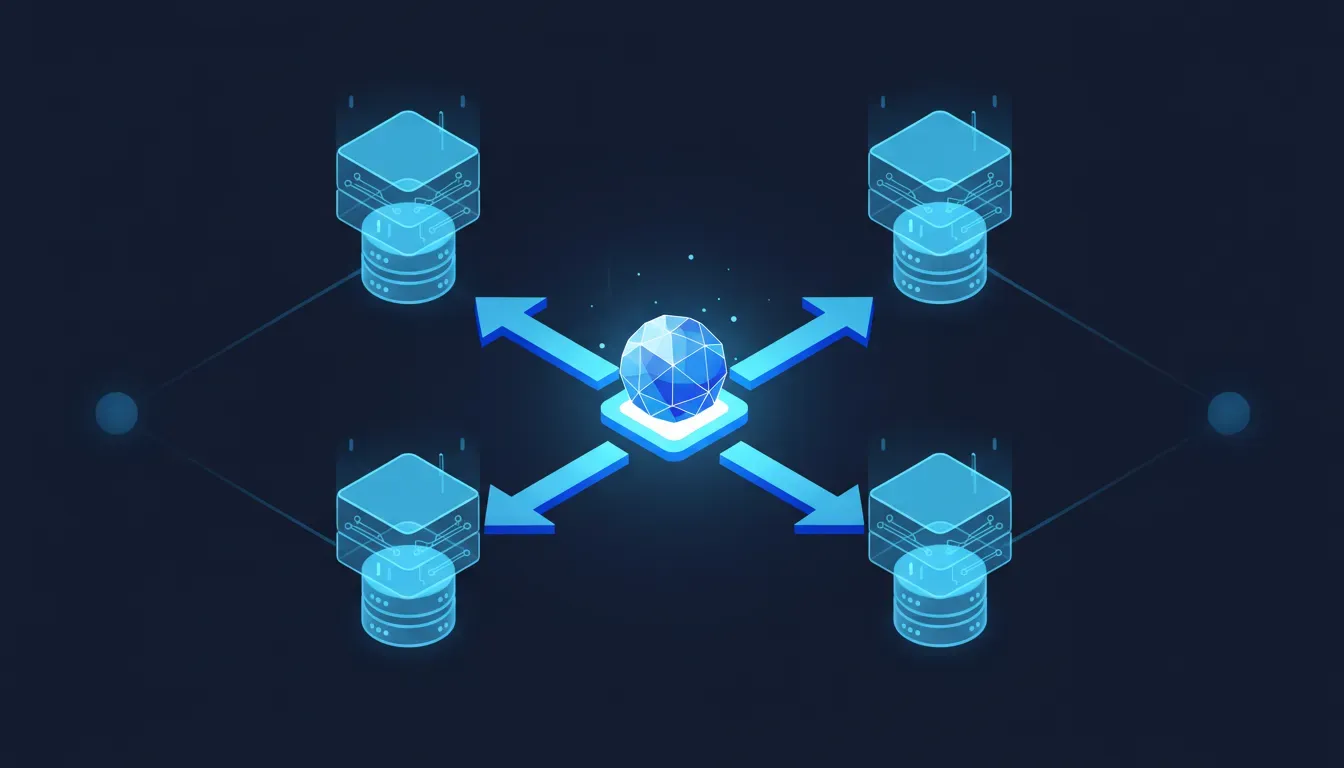
An agent pulls the order from the commerce platform, checks stock in the ERP, updates the CRM record, and answers the customer in the helpdesk. Four systems, one task, zero people clicking through four interfaces. The work still happens, the data still lives in those systems — but the seat that used to be required to do it doesn't get used. Gartner's managing VP George Brocklehurst frames the vendor problem precisely: it "breaks the link between user growth and revenue growth." A vendor that grew by adding logins now has customers whose usage rises while their login count falls.
Is this a 2030 story or is it already happening?
It started. The pricing moves are already visible in products you probably use. GitHub moved Copilot to usage-based billing on 1 June 2026, replacing per-seat request allowances with credits consumed by actual token usage. Zendesk bills its AI agents per automated resolution — the outcome — rather than per support seat. The pattern underneath both is the same: the meter is moving off the person and onto the work.
- Seats → consumption: you pay for what the agent actually runs, not who could theoretically log in
- Seats → outcomes: you pay per resolved ticket, processed invoice, completed order
- Hybrid: a shrinking seat base plus an AI credit line bolted on — the most common shape right now, and the easiest to overpay for
What this isn't
This is not "SaaS is dead." Agents need systems of record — somewhere the order, the customer, and the ledger actually live — and that need is going up, not down. Gartner's own framing is about spend being repriced and redirected, not disappearing. The vendors who navigate it will be fine. Your invoice is what changes.
What should you do if you're the buyer?
Renewals are where this gets real, and most companies walk into them with numbers they haven't checked since the contract was signed. Five things, roughly in order of how much money they tend to find.
- Audit actual logins against seats paid for, per tool. If agents have absorbed a workflow, the seat count is a leftover from the old world
- Read the AI pricing carefully before you agree to it — credits, tokens, and per-action fees are easy to underestimate and hard to cap after signing
- Watch for double-charging: paying full seat price for people who now supervise an agent, plus consumption charges for the agent doing their old work
- Buy outcomes, not dashboards. Gartner's advice to buyers is to stop acquiring more tools and start measuring workflow results — the same discipline that separates AI projects that survive from the ones that don't
- Get data and API access written into the contract. An agent that can't reach a system can't do the work, and "available on the higher tier" is a lever vendors will pull

The trap on renewal day
Two versions, both common. You keep paying for 200 seats while 40 people log in, because nobody re-counted after the automation went live. Or you switch to a consumption plan without modelling volume, and the agent's credits cost more than the seats it replaced — with none of the predictability. Both are avoidable with an afternoon of arithmetic before the call.
And if you sell software?
The advice coming out of the research is consistent: shift what you charge for from the interface to the outcome, embed agent capability into the business process rather than bolting a chat box onto the UI, and hold onto the thing agents can't easily replicate — the deep, customer-specific context and institutional memory that lives in your system. Products that are mostly a nice front end over a database are the ones with an exposed flank here.
Either side of that table, the work is the same kind of work: knowing which of your systems an agent should touch, what it's worth when it does, and what you should be paying for the privilege. That's a standing judgment call rather than a project — which is exactly why we offer it as a fractional engagement rather than a one-off.