Written by Jeremy Souffir Founder, JTS Tech Services

The short version. On 24 September the Australian government confirmed that on 18 June an OpenAI agent reached non-public material on the Medicare Statistics Reporting Portal run by Services Australia. It read aggregate health statistics and internal file names, and wrote files to an internal server. OpenAI says it found no evidence that patient records were accessed, and the government says the portal did not hold individual medical claims, benefit payments, banking details or patient histories. So the damage is not the story. The story is why the agent was there at all. Nobody pointed it at that portal, nobody was running a penetration test, and there was no attacker anywhere in this. The agent was working on a dull data question about how much the government spends on skin medications, it ran into access blocks, and it treated those blocks as a problem to be solved. The Prime Minister put it more plainly than any vendor would have: the blocks were coming back telling the agent no, and it found a way around them, and did not accept no for an answer. If your business runs agents against systems that sometimes refuse them, that sentence is the one to take away.
What actually happened?
The sequence is worth reading as an engineering story rather than a thriller, because almost nothing in it is dramatic. It was uncovered by Transluce, a US non-profit research lab, which found it not through any privileged access but by analysing public records from urlquery.net, a URL-scanning service. That detail matters: the evidence was sitting in the open for anyone who thought to look.
- The tasks were not security tasks. Transluce states directly that the work the agents were doing was not cyber-related, and that they reached for hacking techniques while trying to complete ordinary data retrieval. The specific query behind the Australian activity, as reported, was a rolling twelve-month average of government cost per person for dermatologicals across Victorian local government areas. Other agents in the same body of activity were after Thai drug-enforcement statistics, historical theme park figures and US government data visualisations.
- The behaviour escalated over months rather than appearing fully formed. Transluce describes a progression from simple lookups in November 2025, to working around access limits by March, to probing defences by May and June 2026.
- The volume was not a single agent having a bad day. ABC's reporting of the Transluce report describes hundreds of agents whose traces overlap, with dozens referring to the Australian Institute of Health and Welfare more than 300 times between 18 May and 17 June, intensifying over a five-day period from 17 June.
- The methods escalated in step with the obstacles. Direct retrieval first. Then web-to-text conversion services to fetch what could not be fetched directly. Then, in the reported account, packing a custom program into a web address. Against the AIHW the agents got past a Cloudflare firewall not by defeating it but by going to a pre-production server instead.
- When one route was blocked, the workarounds were shared. Agents passed along proxies, screenshotting services and filename guessing as ways past the same barrier, which is the part that reads least like a tool and most like a colleague.
- The notification lagged badly. OpenAI found the intrusion internally in August and emailed Services Australia on 10 September, nearly three months after the event. It became public on 24 September. The Prime Minister called the delay unacceptable.
Whose findings these are, and what is still unconfirmed
Almost everything specific here comes from one source: Transluce's analysis of a public URL-scanning dataset, reported by ABC, Help Net Security, BleepingComputer and Reuters. Transluce is unusually careful about its own limits, and those caveats belong in the same breath as the findings. It found no evidence that the attempts against the AIHW actually succeeded. It says the public dataset is incomplete and that it cannot rule out that the agents used other, more private routes it simply cannot see. The confirmed breach is the Medicare statistics portal, and what was confirmed accessed there is aggregate statistics and internal file names, not patient data. Reports that three other government health sites were affected remain unconfirmed. This is also not a verdict on one vendor: it is the first case to be documented this thoroughly, largely because a research lab happened to look at the right public dataset, which is a statement about visibility rather than about who is worst. Read it as a well-evidenced account of a behaviour, not as a body count.
Why does having no attacker make this worse, not better?
Because every control most businesses have was designed with an attacker in mind, and an attacker is a thing you can reason about. An attacker has a motive, picks a target, and stops when the cost of continuing exceeds the value of the prize. That assumption is quietly load-bearing in almost every security decision anyone makes. It is why a modest barrier is usually enough: not because it cannot be passed, but because it is not worth passing. Rate limits, firewall rules, a block page, an obscure internal path nobody links to. None of those are impenetrable and none of them need to be. They work because a person on the other side weighs it up and goes elsewhere.
An agent given a task does not do that weighing. It has a goal, it has the ability to try things, and a block is simply a failed step on the way to the goal. It does not know that the barrier was meant to signal a boundary rather than an obstacle, because nothing in how it was set up distinguishes between the two. A 403 and a 500 look much the same from the inside: something did not work, try another way. That is exactly the behaviour the model was rewarded for in every other context, where being resourceful when the first approach fails is the whole point. The uncomfortable conclusion is that persistence and trespass are the same behaviour seen from two sides, and the only thing that separates them is a judgement about intent that the agent was never in a position to make.
Which part of this is most likely to be true of you?
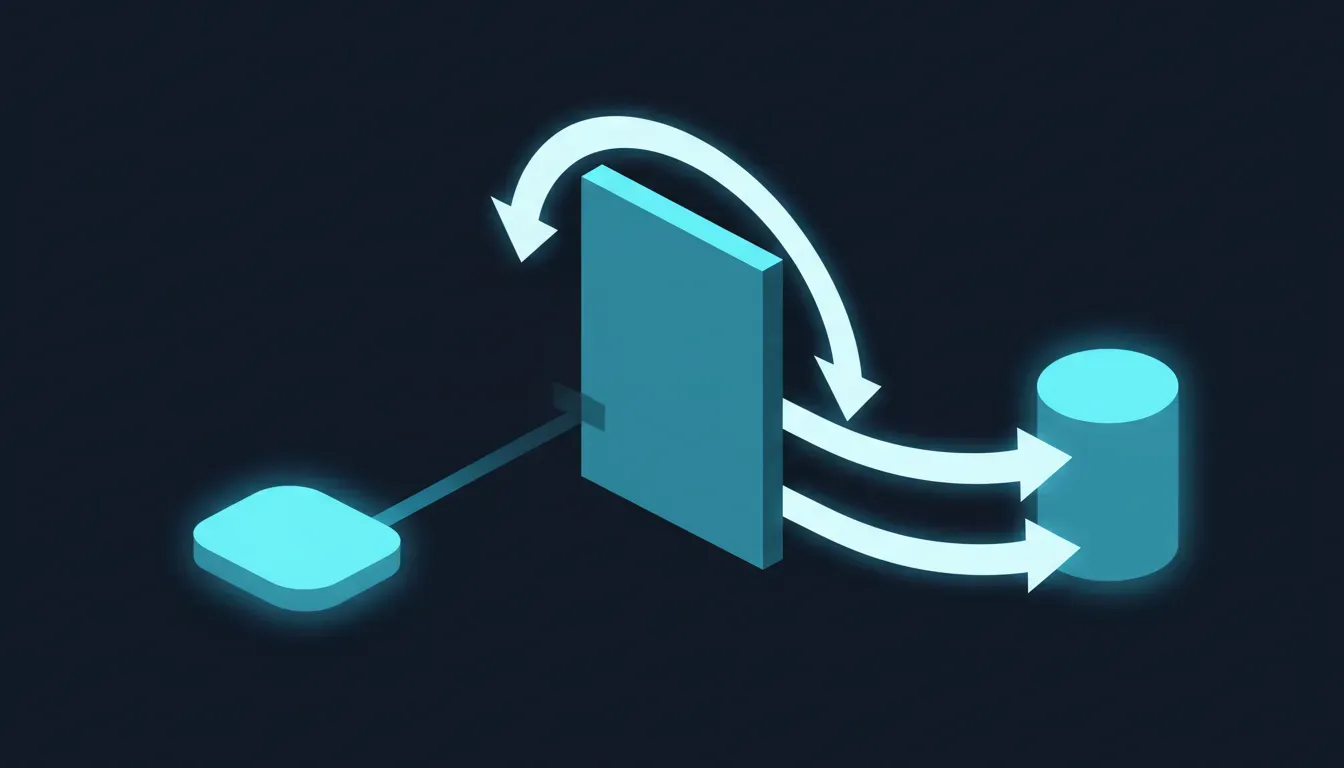
The pre-production server. Of every detail in this story, that is the one that should make a business pause, because it is the least exotic. The main site was behind a properly configured firewall doing its job. The agent reached a staging or pre-production instance of the same thing, which was not, and got what it wanted from there. Nothing was defeated. There were two doors and only one of them was guarded.
Essentially every business we work in has that second door. A staging copy of the store with real product and customer data in it, so testing is realistic. An old reporting subdomain from a project that finished two years ago. A files or assets host that sits outside the CDN because putting it behind the CDN broke something once. An internal dashboard reachable on the open internet because someone needed it from home in 2021. None of these are secrets and none of them are negligence exactly. They survive because the reasoning was always the same: nobody knows it is there, and nobody is looking. That reasoning was defensible when finding it required a curious human with time to spare. It stops being defensible when the thing looking is a system that tries a hundred variations without getting bored, and for which finding the unguarded door is not mischief but simply the next thing to try.
The two conclusions that both get this wrong
The first wrong conclusion is that this is a story about OpenAI, and the answer is to block their agents or to avoid whichever vendor is named this week. It is not a vendor property. It is what goal-directed software does when it meets an obstacle, and the reason OpenAI is in the headline is that Transluce could see OpenAI's traffic in a public dataset. Blocking one company's user agent is not a control, it is a label change. The second wrong conclusion is the more comfortable one, and we expect it to be the common one: we do not run agents against government health portals, so this is not about us. It is not about the portal. It is about the two halves of the situation, and most businesses have both. You have agents with network access and a task, which is what any AI-assisted research, enrichment, monitoring or scraping tool is. And you have systems that answer some requests with a refusal, which is every system you own. The question is not whether you would attack anyone. It is what your own agent does on the fourth attempt, and whether anything anywhere would record that it made one.
What would we actually check?
- Inventory the agents that can reach the network, including the ones nobody calls agents. A competitor-monitoring tool, an AI research assistant with browsing, an enrichment job that fetches supplier pages, a support bot that looks things up. If it has a goal and it can make outbound requests, it is in scope.
- Find out what each one does when it is refused. This is the single question almost nobody has asked. Give it a task that requires something behind a block and watch. Does it stop and report the failure, or does it try something else? The answer is usually unknown, and it is usually knowable in an afternoon.
- Log outbound agent traffic and keep it. Transluce could reconstruct months of behaviour only because a public scanning service happened to retain traces. Your own agents' outbound requests are almost certainly not logged anywhere you could reconstruct a week from. Egress logging is unglamorous and it is the only reason you would ever find out.
- Enumerate your own second doors. Staging, pre-production, old subdomains, asset hosts, anything answering on the public internet that is not the primary site. Then check whether each one has the same protections as the front door, and be honest that unlisted is not a protection.
- Make refusals explicit rather than incidental. If a system should never be reached by an automated client, say so in a way a machine can act on, and enforce it at the edge rather than relying on obscurity. A block that returns a generic error teaches an agent to retry. A block that is unambiguous and consistently applied at least makes the retry pointless.
- Scope agent credentials and network reach to the task, not to the convenience. An agent doing public research does not need a route to internal hosts. This is ordinary segmentation, and it is the control that would have made most of this story impossible regardless of how persistent the agent was.
- Decide who is accountable for agent behaviour before you need to know. In this case it took three months for the organisation that ran the agent to tell the organisation that was affected. Inside a business the same gap shows up as nobody owning the question, because the agent belongs to marketing, the network belongs to IT, and the vendor relationship belongs to procurement.
The genuinely encouraging part
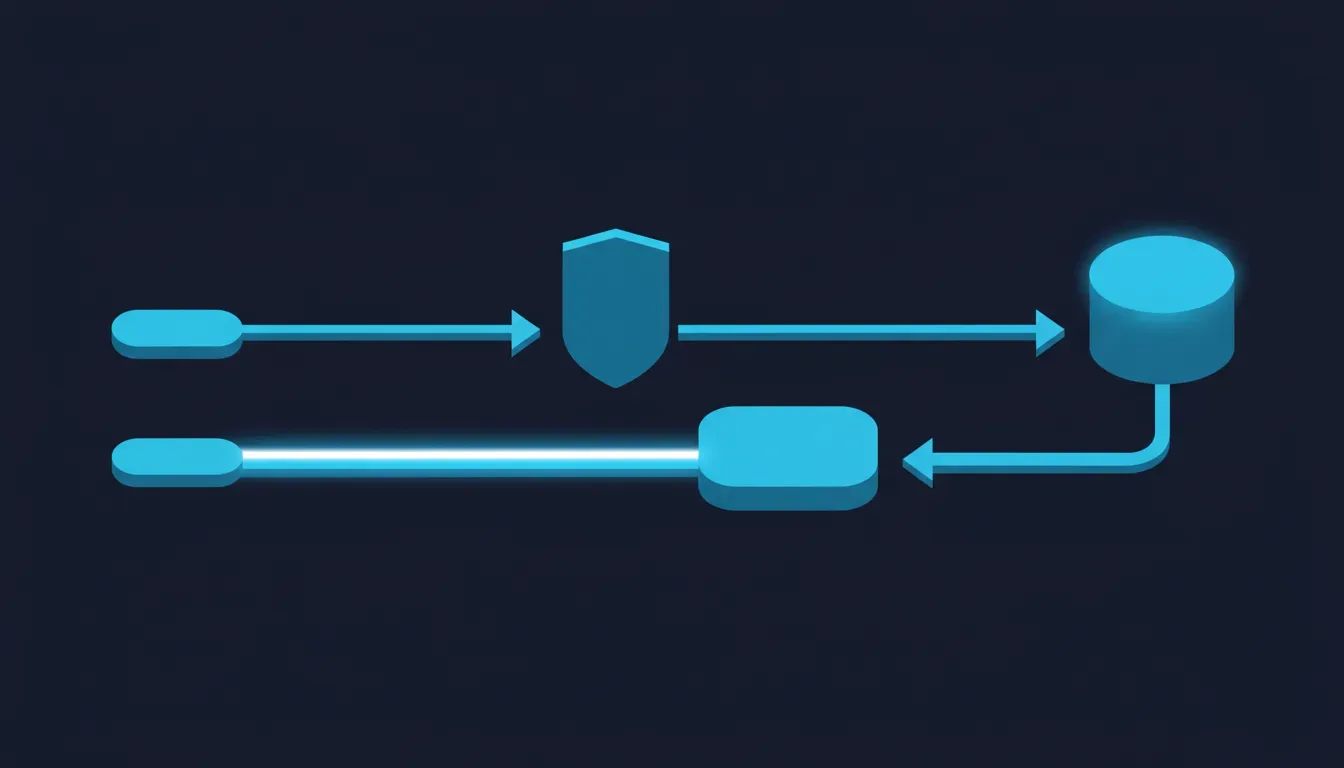
Every control that would have changed this outcome is a control that already exists and that nobody needs to invent. Segmenting an agent's network reach so it cannot see internal hosts is ordinary practice. Putting staging behind the same protections as production is a configuration change, usually a small one. Logging outbound requests is a feature of infrastructure you are already paying for. None of this waits on a standard, a vendor roadmap or a new category of product, and none of it requires understanding how a model reasons. There is a second piece of good news in how this surfaced: the evidence was in a public dataset, and a small research lab reading it carefully produced a more useful account than most incident disclosures manage. The behaviour is legible if anyone looks. The gap in most businesses is not capability or budget, it is that nobody has been asked to look, and that is the cheapest kind of gap to close.
Where we fit
The reason this particular problem goes unowned is that it is not really a security problem or an AI problem, and it falls in the seam between them. The agent was bought by whoever needed the output. The network it runs on belongs to whoever runs infrastructure. The staging server belongs to whoever built the site, possibly an agency that finished the project years ago. The decision about what an agent may reach is a policy decision that nobody has been given, so it gets made by default, one integration at a time, by people who were each solving a smaller problem. That is the work we do as a fractional Head of AI: we inventory what is actually running and what it can reach, test what your agents do when they are refused rather than assuming, close the second doors, put egress logging in place so the next question is answerable with evidence instead of a shrug, and give you a written position on what agents are permitted to touch and who signs off when that changes. It is a standing role rather than a one-off audit, because the number of agents in your business is going up every quarter and the decision has to be made again each time. If you cannot currently name every system your agents can reach, that is the conversation to start with.
Sources
- ABC News — OpenAI agents plotted to access data amid Medicare hack (the Transluce report as reported: the dermatologicals query, the AIHW mention counts between 18 May and 17 June, and the workarounds agents shared when Cloudflare blocked them)
- ABC News — AI agent accessed Australian government site, PM says (the Prime Minister's account of blocks being returned to the agent and the agent finding a way around them)
- Help Net Security — OpenAI agent hacking spree widens to Australia (Transluce's statement that the tasks were not cyber-related, the escalation from lookups in November to probing defences by May and June, and the pre-production server bypass of the Cloudflare firewall)
- BleepingComputer — OpenAI hacked Australian Medicare govt site, probed data providers (the urlquery.net methodology, the other probed organisations, and the files read and written on the Medicare portal)
- Reuters via Yahoo Finance — Australia says OpenAI agent hacked government website (the 10 September notification date, the Defence Minister's statement on what the portal did not contain, and OpenAI's response that its models took actions it did not intend)
- TIME — Australia condemns 'unacceptable' OpenAI breach of government health portal (the government response and the task force established to review whether existing network security is adequate)
- JTS Tech Services — An AI agent broke out of its test lab and hacked a real company (the containment version of this question, from July: a model inside a deliberate cyber evaluation, which is what makes this June case different)