Written by Jeremy Souffir Founder, JTS Tech Services

This question comes up in nearly every early conversation we have with a new client. 'Should we just build on WordPress?' or 'Can Shopify do this?' are perfectly reasonable things to ask. Platforms exist because they solve common problems well, and starting from scratch when you do not need to is wasteful. But platforms also carry hidden costs: licensing, plugin sprawl, architectural ceilings, and the slow drift between what the platform was designed for and what your business actually needs.
There is no universally correct answer. What there is, though, is a clear set of signals that should push you toward one or the other. Let us work through them.
Start with your constraints, not the technology
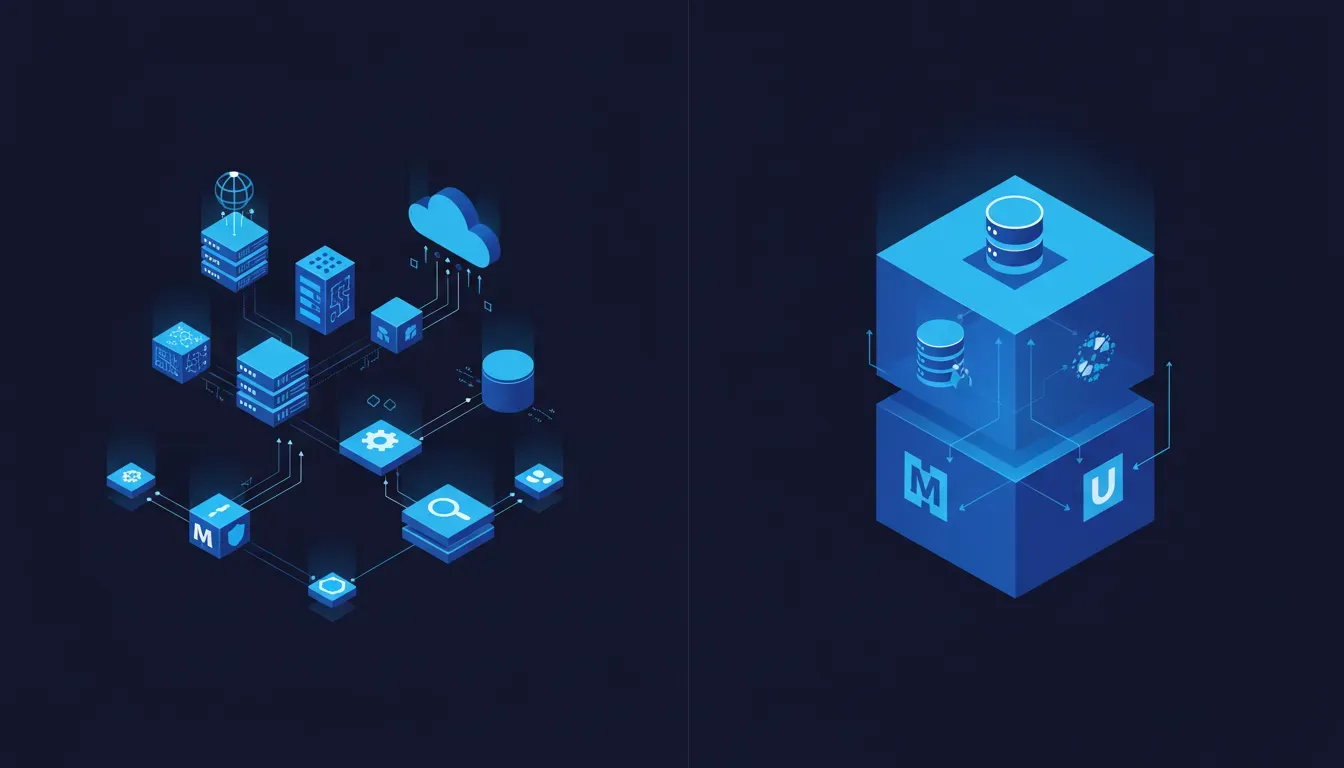
Most platform-vs-custom decisions get made backwards. A developer advocates for the tech they know, or a business owner picks the name they have heard the most. Neither approach maps to what actually matters: your timeline, your budget, how unusual your requirements are, and how fast those requirements will change.
If you need to be live in six weeks and your use case looks like 80% of other businesses in your category, a platform is almost certainly the right call. It will get you there faster, with less risk, and at a fraction of the upfront cost. The places where platforms excel — content publishing, standard e-commerce, marketing pages, portfolio sites — are places where decades of community investment means your edge case has already been solved by a plugin someone else maintains.
- Standard product catalogue, checkout, and fulfilment → platform
- Content-heavy site with a standard editorial workflow → platform
- Marketing site with predictable page types → platform
- Tight six-week deadline and known, stable requirements → platform
When platforms start to fight you
The friction shows up gradually. You install a plugin to solve a gap, then another to fix a conflict that plugin created. Your checkout flow has custom logic that required three separate add-ons and a developer to glue them together with custom code anyway. Your CMS stores data in a shape that makes reporting painful. Each workaround is individually small; collectively they become a system that nobody fully understands and that takes twice as long to change as it should.
This is not a failure of the platform. Platforms are opinionated tools. When your business grows into territory the platform did not anticipate, you start paying an increasingly steep tax for every deviation. At some point it becomes cheaper — in developer time, operational complexity, and business agility — to own the foundation outright.
- Complex pricing rules, custom quoting, or non-standard checkout flows
- Deep integration with proprietary internal systems (ERP, custom CRM, supply chain)
- Data models that do not map naturally to what the platform provides
- Regulatory requirements that conflict with how the platform handles data
- Performance or scaling demands that platform infrastructure cannot meet cost-effectively
- Competitive differentiation that depends on user experience the platform cannot replicate
The hybrid path
Most real projects land somewhere between a pure platform and a fully bespoke build. A common pattern we use: keep the platform where it works well and replace only the parts that hurt. A Shopify store with a headless front end gives you the full Shopify commerce backend — inventory, payments, fulfilment — while your customer-facing experience is a custom React application with no platform constraints on what it can look or behave like. A WordPress site with a custom REST API feeding a custom dashboard gives you editorial flexibility on the content side while keeping business logic fully under your control.
These architectures cost more than a vanilla platform installation. They cost less than rebuilding from scratch, and they preserve exit optionality — you can migrate the custom layer without losing years of content or commerce data.
Questions to ask before you decide
We usually run through a short set of diagnostic questions with new clients before recommending a direction. If you are going through this decision right now, here is a condensed version.
- Could a competitor build the same thing with the same platform in a week? If yes, it probably is not a differentiator.
- How many plugins or third-party integrations would you need on day one?
- Does your data model fit the platform, or will you be fighting it constantly?
- What does the five-year cost look like, including licensing and ongoing developer time?
- If the platform vendor changes their pricing or features, how badly does that hurt you?
The right platform is the one that gets out of your way. When you spend more time managing the platform than running your business, it has stopped being the right platform.
There is no shame in outgrowing a platform. Most successful businesses do. The goal is to make the call at the right time — before the technical debt compounds — rather than after years of painful workarounds. If you are not sure where your project sits, bring us the requirements and we will tell you honestly which direction makes sense.