Services
Infrastructure That Scales Without Surprises
Your application is only as reliable as the infrastructure under it. We build cloud environments on Google Cloud and AWS that are secure, observable, and built to handle growth.
Most early-stage web products run on whatever hosting was convenient at launch. That works fine until it does not — until a traffic spike takes the site down, until a deploy goes wrong with no rollback, until a security incident reveals that no one had really thought about access control. JTS builds cloud infrastructure the right way from the start, so that growth is something you plan for rather than something that catches you off guard. We work primarily on Google Cloud Platform and AWS, handling everything from initial architecture through ongoing operations.
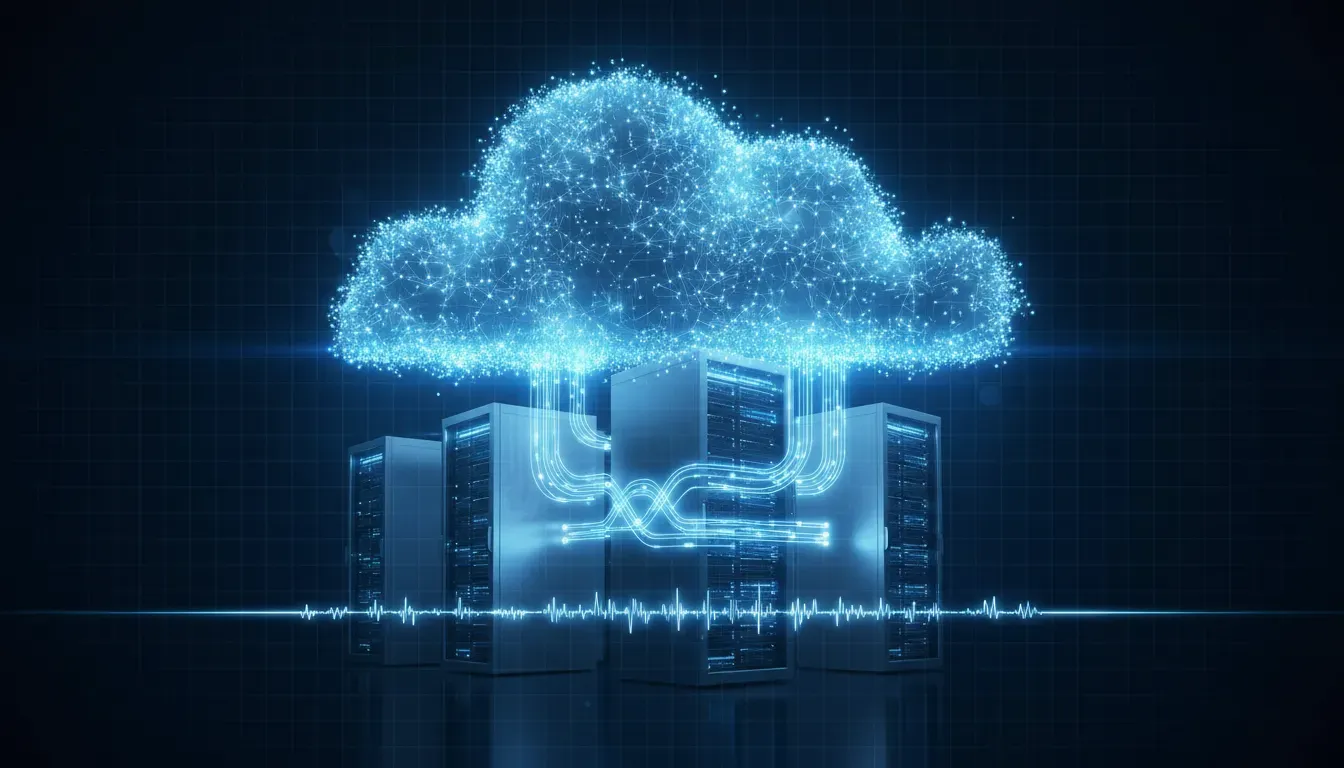
Cloud Architecture That Fits the Application
There is no universal right answer in cloud architecture. A marketing site has different requirements than a multi-tenant SaaS platform, and a startup needs different tradeoffs than an enterprise. We design infrastructure that is appropriately sized — not over-engineered for where you are today, but not a dead end either.
For most web applications we work with container-based deployments (Docker, Kubernetes, or managed equivalents like Cloud Run or ECS Fargate), managed databases, CDN configuration, and properly structured networking. We design for high availability where it matters: multi-zone deployments, health checks, and automatic failover.
Infrastructure is defined as code. Every resource — servers, databases, load balancers, DNS records, IAM roles — is declared in Terraform or equivalent IaC tooling and lives in version control. This means every change is reviewed, every environment is reproducible, and there are no undocumented manual changes accumulating in the background.
- GCP and AWS architecture design and implementation
- Container-based deployments (Cloud Run, ECS, GKE, EKS)
- Managed database setup and configuration
- CDN and edge configuration
- Infrastructure as Code with Terraform
- Multi-environment setup (dev, staging, production)
CI/CD and Developer Productivity
A deployment pipeline that developers trust changes how quickly and confidently a team ships. We build CI/CD pipelines that run tests automatically, enforce code quality checks, build and push container images, and deploy to staging and production with appropriate approval gates.
We use GitHub Actions or equivalent tooling depending on what is already in your stack. The pipeline is documented so any developer can understand what happens when they push code. We also set up branch-based preview environments for web applications — every pull request gets its own deployed environment, which makes code review and QA dramatically more effective.
Secrets management is handled properly: environment variables and API keys in a secrets manager (GCP Secret Manager, AWS Secrets Manager, or similar), not in `.env` files committed to repositories.
- CI/CD pipeline setup and documentation
- Automated test execution on every pull request
- Preview environments per pull request
- Container registry and image management
- Secure secrets management

Observability and Incident Response
You cannot manage what you cannot see. We instrument applications with structured logging, application performance monitoring, uptime checks, and error tracking. When something goes wrong — and eventually something always does — you know about it immediately and have the information needed to diagnose it.
We configure alerting that is actionable rather than noisy. Alerts go to the right people through the right channels, with enough context to understand severity. We also document runbooks for common operational scenarios: how to scale up under load, how to roll back a bad deploy, how to restore from backup.
- Structured logging and log aggregation
- Application performance monitoring
- Uptime and synthetic monitoring
- Error tracking and alerting
- Operational runbooks

Cost Management and Ongoing Operations
Cloud costs have a way of growing silently. We set up cost alerting and tagging policies from day one so you always know what you are spending and why. We conduct periodic cost reviews for clients on retainers, identifying resources that can be right-sized or eliminated.
For companies that do not have internal DevOps capacity, we offer ongoing cloud operations as part of a retainer: handling infrastructure changes, reviewing deploys, responding to incidents, and keeping the environment up to date with security patches and platform updates.

What you get
Included in every engagement
- Cloud architecture design document
- Full infrastructure provisioned in Terraform (IaC)
- CI/CD pipeline with automated tests and deployment gates
- Monitoring, alerting, and error tracking configuration
- Secrets management setup
- Operational runbooks and architecture documentation
- Cost tagging and alerting configuration
FAQ
Common questions
- We are on shared hosting right now. When does it make sense to move to cloud infrastructure?
- When performance or reliability is becoming a real issue, when you need the flexibility to scale specific components independently, or when security requirements demand more control. We can help you assess whether the move is warranted now or whether an optimised shared hosting setup will serve you for longer.
- GCP or AWS — which do you recommend?
- Both are excellent platforms and the right choice depends on your situation. GCP tends to be more straightforward to operate for teams without dedicated cloud engineers, and its pricing model is often simpler. AWS has a wider service breadth and may make sense if you have an existing relationship or team experience. We are experienced on both and will recommend the better fit for your context.
- Can you take over management of an existing cloud environment?
- Yes. We start with an infrastructure audit — reviewing current architecture, identifying risks, and documenting what exists. We then bring the environment up to our standards incrementally, prioritising the highest-risk gaps first. We have inherited environments ranging from well-maintained to quite chaotic.
- What does ongoing cloud management look like as a retainer?
- It typically covers infrastructure changes and deployments, security patching, incident response, cost review, and ongoing architecture evolution as your product grows. The scope and cost scales with the complexity of your environment. We handle the operational work so your development team can focus on the product.
Related services
Have a project for us?
Let's build something that works — across the whole stack.
Tell us what you're building — we'll get back to you fast.