Written by Jeremy Souffir Founder, JTS Tech Services

The short version: on 24 August OpenAI turns ChatGPT ads on across 31 European markets, taking its ad business from nine markets to roughly forty in a single move — the largest expansion it has made. If you are reading this in Canada or the US, none of that is news to your customers, because ads have been running here since the pilot began in February. What the expansion changes is seriousness: this is now a real global ad channel with real inventory pressure, and your media buyer is about to be pitched on it. So the mechanic is worth getting right before the budget conversation happens. Ads in ChatGPT are labelled, they sit beneath the answer rather than inside it, and OpenAI states plainly that they run on separate systems and that advertising does not influence the responses the model gives. Take that at face value for a second, because it has a consequence nobody selling you AI ads will lead with: the money buys the space under the recommendation. It cannot buy the recommendation. You can spend a quarter's budget appearing directly below a paragraph that tells the shopper to buy from someone else.
What actually ships on 24 August?
OpenAI announced the expansion in the middle of last week and the rollout starts on 24 August. The specifics, as reported consistently across the outlets that covered it:
- 31 European markets go live at once, including Germany, France, Spain, Italy, the Netherlands, Sweden, Norway, Denmark, Austria, Ireland, Belgium, Poland, the Czech Republic and Portugal.
- That takes the footprint from nine markets to roughly forty. The previous nine were the US, Canada, Australia, New Zealand, the UK, Japan, South Korea, Brazil and Mexico — the US first, back in February.
- Ads appear only for signed-in adults on the Free and Go plans. Plus, Pro, Business, Enterprise and Edu accounts stay ad-free, and OpenAI says it does not serve ads to accounts it identifies as belonging to under-18s.
- In Europe the ads launch without personalisation, which OpenAI frames as a GDPR compliance decision. Elsewhere, personalisation exists and the user controls it.
- Advertisers buy through OpenAI's own ad sales team, agency partners and technology partners for now. Self-service buying through an Ads Manager is promised later, without a date attached.
- OpenAI's stated scale is around a billion weekly ChatGPT users, of whom it says roughly 20% show commercial intent, and it has said ad revenue grew more than 25% since the start of August.
Whose numbers these are
The billion weekly users and the 20% commercial-intent share are OpenAI's own figures, given by its executives to the trade press, and neither has been independently audited. The revenue growth figure is likewise the company describing its own business during an expansion announcement. We are repeating them as OpenAI's claims, not as findings. You will also see confident CPC ranges for ChatGPT ads circulating this week; every one we traced led back to an SEO content farm rather than to OpenAI, so we are not printing a number we cannot stand behind. Nothing in the rest of this post depends on any of those figures being exactly right.
Why does "separate from the answer" matter so much?
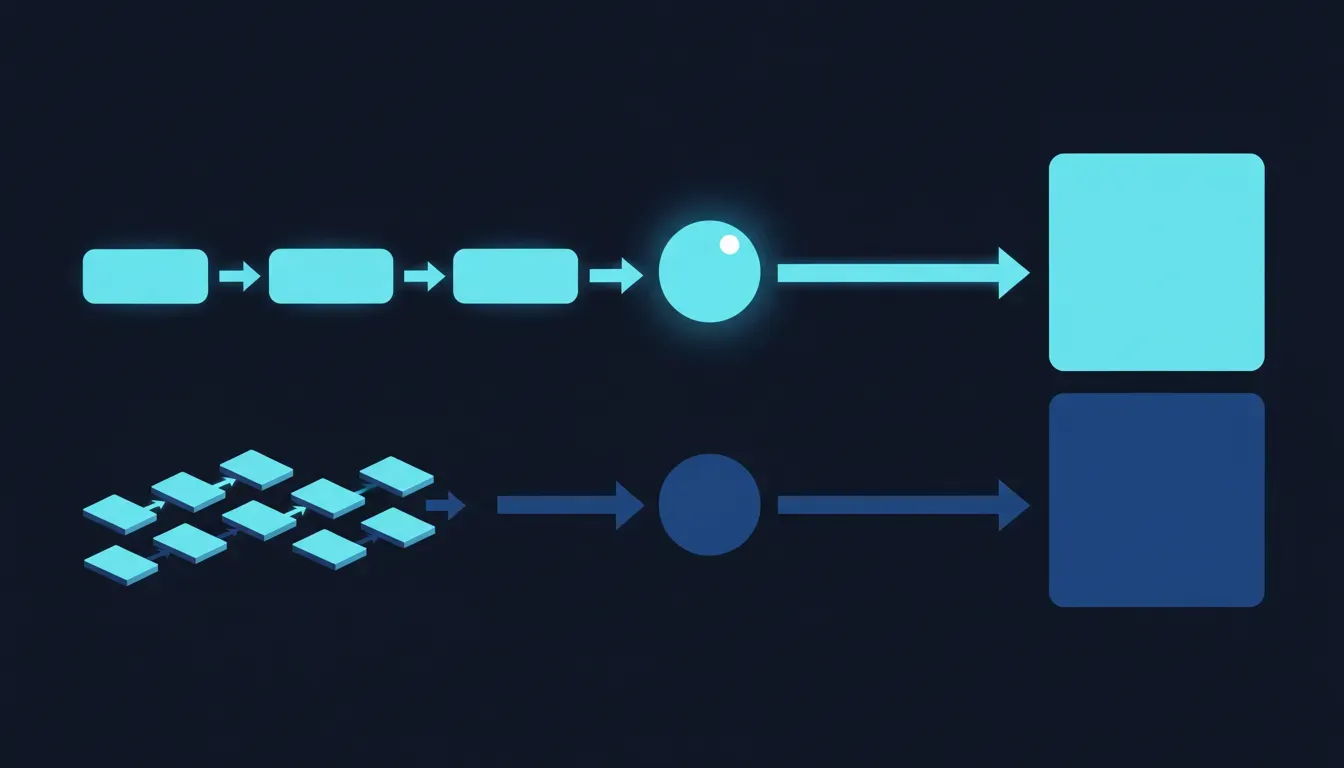
Because it is the whole difference between this and the search auction everyone is mentally comparing it to. In Google, the paid result and the organic result are different rows on a page of ten links, and the user's job is to pick one. In ChatGPT, the answer is not a row. It is a paragraph that has already done the picking. It names a product, or a shortlist, and it explains why. The ad slot arrives underneath a decision that has already been made in front of the reader's eyes.
That means the two surfaces are not competing for the same click in the same way, and — critically — they are not fed by the same pipeline. The answer is assembled from what OpenAI's systems have read from the open web and from whatever product data it has ingested. The ad is assembled from an auction. There is no wire between them, by design and by OpenAI's own statement. So the lever that decides whether the assistant says your name is still the boring one we have been writing about all year: what your pages and your feed actually hand back when the machine fetches them.
So is the real risk the ads, or the reporting?
The reporting. This is the part we would put in front of a CFO rather than a marketing manager, because it is a budgeting failure mode rather than a marketing one, and it is close to inevitable unless somebody names it in advance.
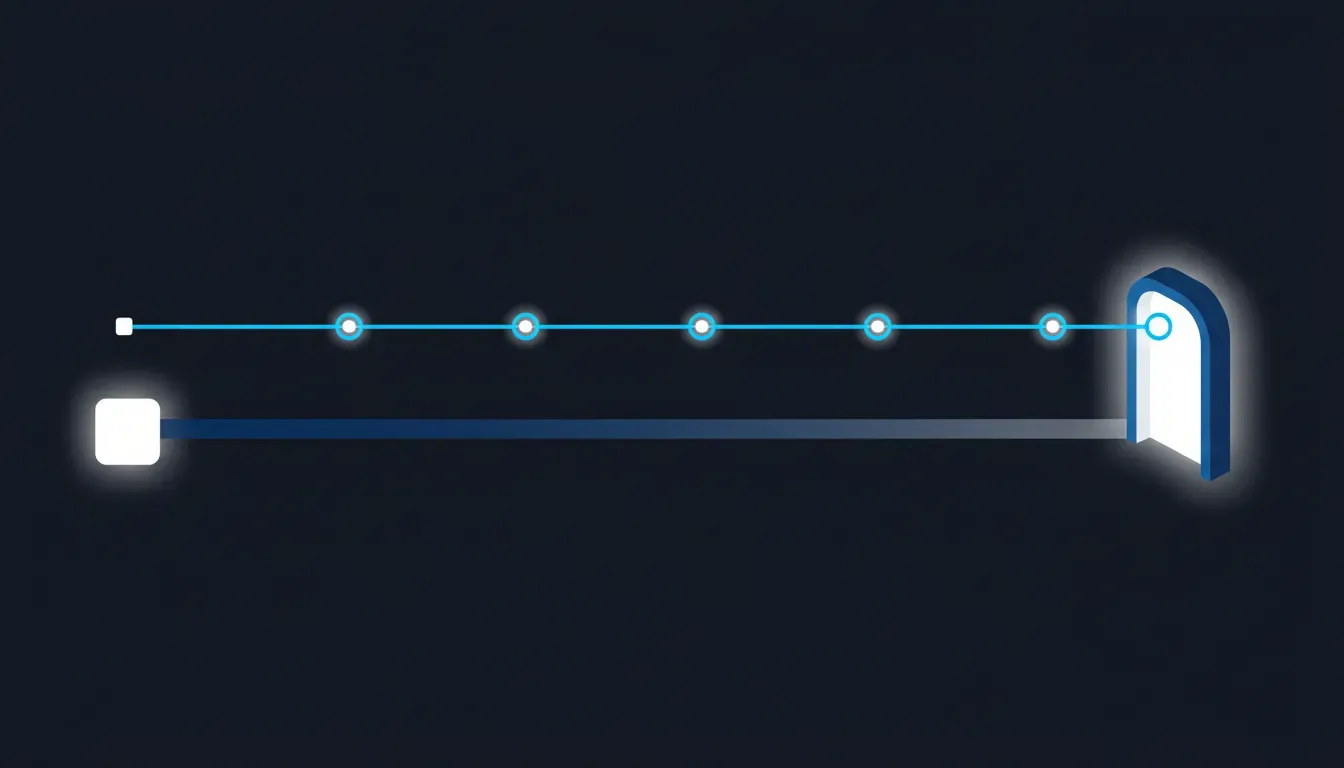
A paid click out of ChatGPT arrives fully dressed. It has a campaign, a cost, a landing page and a conversion you can attribute. An organic mention in the answer above it arrives as a session with no query, no rank, no impression count and frequently no usable referrer at all — and in a large share of cases it arrives as no session whatsoever, because the reader got what they needed from the answer and never clicked. One of those two things produces a tidy row in a spreadsheet with a return figure at the end. The other produces an argument.
Put both in the same quarterly review and you already know which one gets the next increment of budget. The organic side is not underperforming; it is unmeasured, which reads identically in a spreadsheet and is a completely different problem. This is the same trap that made companies over-invest in branded search for a decade — paying to be found by people who were already looking for them, because that particular click was the one the dashboard could see.
The two conclusions that both get this wrong
The first wrong conclusion is that ads solve AI visibility, so the structured-data and feed work can stop. It cannot: the ad is architecturally incapable of changing what the assistant recommends, so buying it while your product data stays unreadable means paying to sit underneath your competitor's endorsement in perpetuity. The second wrong conclusion is the mirror image — that ads are a distraction and a sell-out and can be ignored entirely. Also wrong, because a labelled slot directly beneath a high-intent answer is a genuinely good position, and the honest reason to skip it today is price discovery and lack of self-serve access, not principle. Both readings share the same mistake: treating one channel as the substitute for the other, when they attach to different parts of the same screen and do different jobs.
What would we actually spend money on this quarter?
For most of the merchants and mid-market companies we work with, the honest answer this quarter is: not the ads. That is an awkward thing to write in a post about a new ad channel, so here is the reasoning rather than just the verdict.
- You mostly cannot buy it yourself yet. Access runs through OpenAI's sales team, agencies and technology partners, with self-service still unscheduled. If you are not spending at a level those routes care about, the practical answer today is a waiting list, not a campaign.
- The inventory is about to be repriced. Roughly quadrupling the market footprint in one week changes both supply and competition, and nobody's benchmark from July survives that. Let someone else pay to discover the new floor.
- The organic work is cheaper and compounds. Making your pages and feed readable costs a fixed amount once and keeps paying; ad spend stops the day you stop it, and in this surface it does not even move the recommendation.
- The exception is real and worth naming: if you already run material paid search in a category where ChatGPT is visibly cited in your customers' research, and you have an agency route in, a bounded test is reasonable. Budget it as an experiment with a kill date, not as a channel.
- Whatever you decide, instrument the organic side first. If you cannot say roughly what assistant-referred traffic is currently worth to you, you have no way to defend it against a paid line that reports itself, and the decision will get made by whichever number was easier to produce.
The genuinely encouraging part
Strip away the announcement and this is the clearest signal yet that the recommendation itself is not for sale. OpenAI has built its ad business specifically so that money sits beside the answer rather than inside it — partly for regulators, partly because an assistant that can be bought is an assistant nobody trusts twice. Whatever you think of the company, that architecture is worth something to you: it means the thing that decides whether an assistant names your business is still the quality and legibility of what you actually publish. That is a market where a careful mid-market brand can beat a much larger competitor, because the winning move is doing the unglamorous work properly rather than out-bidding anyone. Twenty years of search taught everybody that visibility is something you rent. On this surface, for now, the top half of the screen is still something you earn.
Where we fit
The reason this particular change is dangerous to a growing company is not that ChatGPT ads are complicated. It is that the decision it forces — how much to spend against a slot you can measure versus a surface you cannot — will otherwise be made by whoever brings a slide to the meeting, and the person with the ad dashboard always has a slide. Retaining JTS as your fractional Head of AI & Digital means that decision has an owner who is not selling you either channel. We put a defensible number on what assistant-referred traffic is currently worth to you, so the organic side can argue for itself in a budget review. We keep the feed, edge rules and pages that decide the recommendation genuinely readable, because that is the half no spend can fix. We tell you which of the week's announcements actually touch your business and which are noise. And when a paid test is worth running, we scope it with a kill date and a number attached, rather than letting it quietly become a permanent line item nobody can defend.
Sources
- OpenAI — ChatGPT Ads expands across Europe (the primary announcement: the 31 markets, the 24 August start, plan eligibility, and OpenAI's statement that ads are labelled, kept separate from answers and do not influence responses)
- Adweek — OpenAI Is Taking Its Ad Business to 31 New European Markets (the nine prior markets including Canada, the February US start, and OpenAI's own figures for weekly users, commercial intent and August revenue growth)
- The Next Web — OpenAI brings ChatGPT ads to 31 European markets (independent write-up of the same announcement, including the labelling and separation claims and the ad-free paid tiers)
- Thurrott — ChatGPT Ads Are Coming to 31 European Countries (corroborating detail on placement, plan eligibility and OpenAI's stated rationale)
- Trending Topics — OpenAI Confirms: ChatGPT Ads Will Launch in 31 European Countries Next Week (the European view: the GDPR personalisation carve-out, and the buying routes available now versus the promised self-service Ads Manager)
- JTS Tech Services — In 93% of free ChatGPT answers, nobody opens your page (how the answer above the ad slot is actually assembled, and what it reads from your pages)
- JTS Tech Services — Google just shipped a button that outranks your SEO (the free, earned equivalent on Google's side of the same fight)