Written by Jeremy Souffir Founder, JTS Tech Services

The direct answer first. On 4 November 2026, Sabrina Geremia, Google Canada's Vice President and Country Managing Director, published a post saying that "rolling out starting today, direct checkout, powered by UCP, is expanding to Canadian shoppers on AI Mode in Google Search and the Gemini app." Shoppers can buy from "eligible Canadian retailers, including lululemon, select Shopify merchants, Shoppers Drug Mart and Simons" while they are researching, paying with Google Pay using the cards and addresses already saved in Google Wallet. The retailer remains the seller of record. On 8 October and again on 16 October we told you Google had moved Canada to next year, and we were quoting Google's own Merchant Center help page, which as of this morning still says the Merchant Center integration is rolling out in the US "with Australia and Canada to follow next year". Both things are true at once. The shopper side of this checkout is live in Canada now. The self-serve merchant side, where you switch it on from your own Merchant Center account, is still a 2027 promise. The reason Canadian shoppers already have something to buy is that Google launched with four partners who did the integration for them, and one of those partners is Shopify, which did it once for every eligible store it hosts. If that is you, this post is about what is already true in your admin. If it is not, it is about which form to fill in and what to prepare while you wait.
What exactly did Google switch on yesterday?
The Google Canada post is short and the facts in it are worth separating from the framing around them.
- Where the shopper is. AI Mode in Google Search and the Gemini app, for shoppers in Canada. Google calls it direct checkout and says the point is to let shoppers "take action in the moment" instead of leaving for a store.
- Who they can buy from. "Eligible Canadian retailers, including lululemon, select Shopify merchants, Shoppers Drug Mart and Simons." Four names, and one of them is a platform rather than a retailer.
- How they pay. Google Pay, with "payment methods and shipping info already saved in Google Wallet". No new card entry, no account creation on your site.
- Who sold it. "Retailers remain the seller of record, with the ability to customize the integration to their specific needs." The order is yours, legally and operationally. So are the returns and the support.
- What comes next. "In the coming months" Google will work with retailers to add capabilities like applying loyalty rewards. "Starting next year" it will "begin broadening access by making simplified UCP integration available directly within Merchant Center". That is the self-serve door, and the date on it has not moved.
- Why now. Google's own research with Angus Reid, run in October among 1,057 Canadians according to Retail Insider, found 59% of Canadian holiday shoppers plan to use an AI tool to help them shop this season. The launch is timed for the holiday that starts in three weeks.
Were we wrong on 8 October?
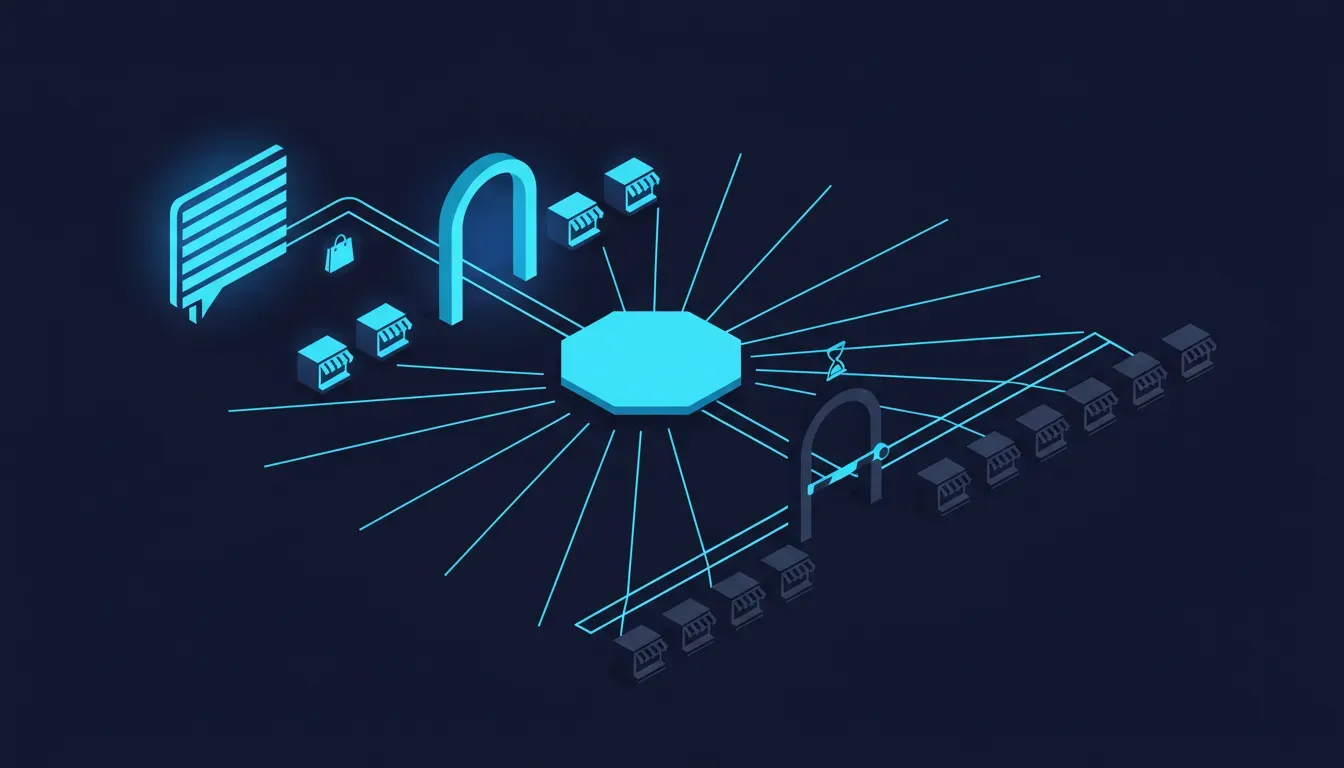
No, and it matters why not, because the same confusion will catch merchants who read yesterday's headlines. There are two Google documents. The Merchant Center help page describes the UCP integration hub, which is the process by which a merchant implements the protocol against Google's developer guide, fills in an interest form, waits to be selected, and then onboards from its own account. That page says, today, that the hub is "gradually rolling out in the U.S., with Australia and Canada to follow next year", and it adds a line that turns out to be the whole story: "If you work with a third-party service provider or platform, please connect directly with them to learn more about their plans for Universal Commerce Protocol integration." The 4 November post describes the shopper experience and names the four partners who built against the protocol themselves. lululemon, Shoppers Drug Mart and Simons each did their own integration. Shopify did one, and because Shopify is the platform rather than a store, that single integration covers every store on it that meets the eligibility rules. The merchant who could not get in through Merchant Center in October still cannot. The merchant on Shopify never needed to.
Two words, two authors
Google's post says "select Shopify merchants". Shopify's help page says the channel is "activated by default for eligible stores" and that direct checkout "is also rolling out to Google users and might not yet be available in your store". Our reading of the two documents is that eligibility is Shopify's test, selection and pacing are Google's, and neither company has promised any individual store a date. The practical consequence is the same either way: the switch is in your admin, it defaults to on, and the only way to know whether a Canadian shopper can already buy from you inside Gemini is to look.
If you sell on Shopify, are you already in it?
Shopify's help page for the Google AI Mode and Gemini channel is the document to read, not the press coverage. It describes a "Shopify-powered direct checkout" that lets the shopper buy "without having to leave their chat conversation", and it lists what a store needs to be eligible. Shopify's Vice President of Product, Mani Fazeli, told Retail Insider that Shopify merchants selling into Canada "can be faithfully represented and bought from directly in AI Mode and the Gemini app, with zero extra work". Zero extra work is roughly right for the integration. It is not right for the list below, most of which is work you may or may not have done.
- You must sell to customers in the United States, Canada or Australia. Your store can be based anywhere; it is the customer's country that counts. Canada is named in Shopify's requirements and in its description of the shopper rollout, which is more than Google's help page says.
- You must have a valid Google Merchant Center account and meet all of Google's Merchant Center requirements. A store that never set up Google & YouTube, or let its Merchant Center account lapse into suspension, is not eligible however good its products are.
- Your products must be eligible for Shopify Catalog. This is the same catalogue feed that drives the other agentic channels, so the product-data hygiene we covered in September applies here unchanged.
- You must agree to the Shopify Agentic Storefronts Supplemental Terms of Service.
- Your Terms of service, Privacy policy and Return and refund policy must be completed in Settings, then Policies. Shopify lists this as a requirement, not a suggestion. A store with placeholder policies is not eligible.
- Products reach Google through the Google & YouTube sales channel with automatic product and shipping sync turned on, or through Merchant Center directly via a third-party feed provider or manual upload. Either way, Merchant Center is the pipe.
- There are no fees for selling through the checkout beyond your standard payment processing fees, and the discounts and discount codes you set up are supported. Any legal disclosure a product needs must sit in the first 6,000 characters of its description, because that is what the shopper will be shown.
If all of that is true of your store, Shopify's page says purchasing in direct checkout is activated by default. You did not opt in. The toggle lives under Sales channels, then Agentic: turn off "Allow Shopify to manage for me", open Google AI Mode and Gemini, and the Direct checkout switch is there. Turning it off does not remove you from Google's AI surfaces; Shopify says shoppers can still discover your products and are "redirected to your online store to complete their purchase". That is a legitimate choice, and for some stores the right one. It should be a choice somebody made.
What will the checkout refuse to sell, and what will you not see?
Shopify's unsupported-features list is where the headline meets your catalogue. If a product falls into one of these categories, Shopify says the shopper is sent to your online store instead, so nothing breaks, but the frictionless version of the sale is not available for it.
- Product bundles.
- Subscription-only products. A product sold both as a one-time purchase and a subscription can be bought once in the chat, but the subscription cannot be selected there.
- Customizable products.
- B2B-only products.
- Local delivery, pickup in store and pickup points. The checkout ships; it does not arrange a collection.
- Checkouts that require the customer to sign in.
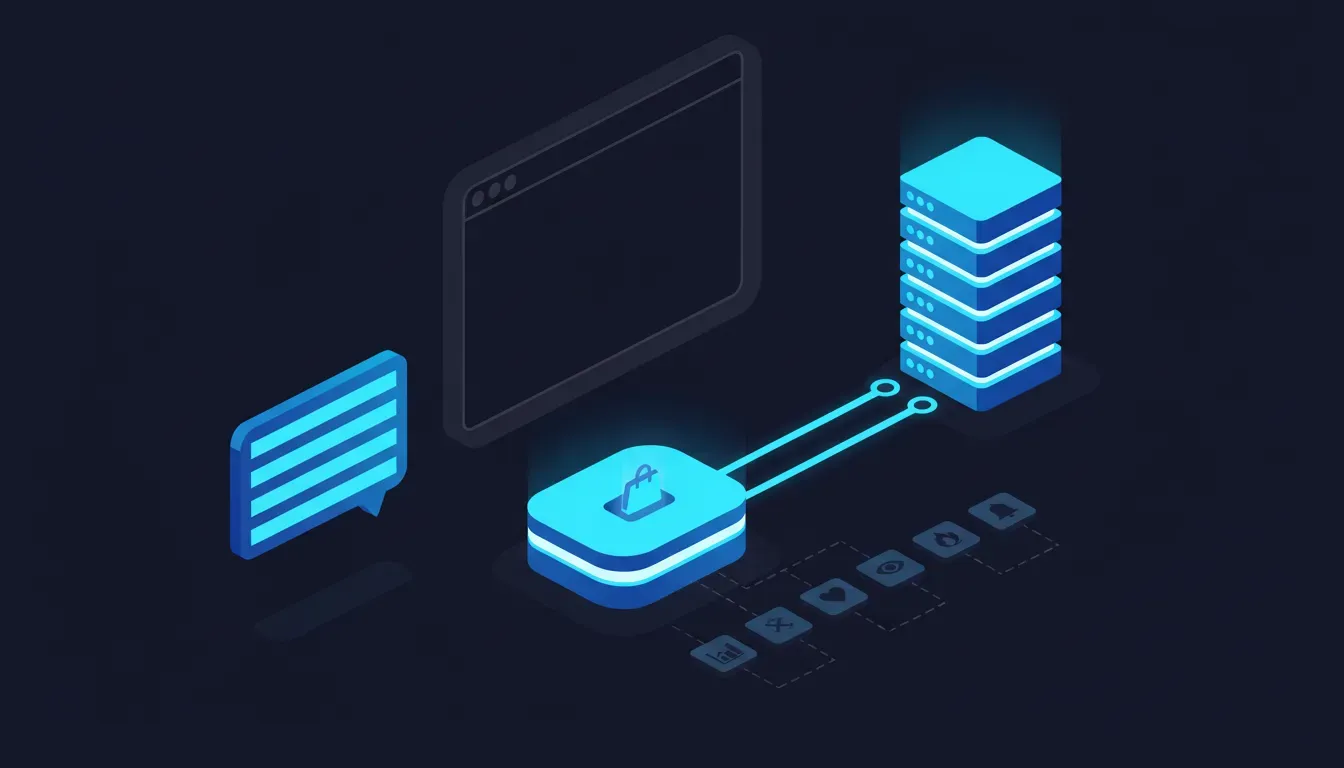
Then there is the line that most merchants will read last and should read first. Shopify's page says: "Google Analytics and custom pixels won't fire in Google AI Mode and Gemini's direct checkout. The checkout fires only server-to-server pixels (started, completed), so none of the standard or custom client side pixels fire." A shopper asks Gemini for a recommendation, buys your product inside the chat, and the order lands in your Shopify admin as a real order from a real sales channel. Your Google Analytics property records nothing. Your Meta pixel records nothing. Your attribution tool, your heatmap, your post-purchase survey trigger, your abandoned-checkout flow: nothing, because none of it ran. The order exists, the revenue is real, and the dashboard you use to decide where to spend next month says the channel does not exist.
We'll see it in GA like everything else
You will not, and Shopify says so in plain text. The only place this channel is fully visible is the order itself, in your admin, with its sales channel attribution. If your weekly reporting starts from Google Analytics or an ads platform, this channel will read as zero while the orders pile up under a channel name in Shopify that nobody has added to the report. Fix the report before the holiday, not in January when the numbers do not reconcile.
It's Google's checkout, Google handles the problems
Google's post says the retailer remains the seller of record. Shopify's page says it is a Shopify-powered checkout. Neither of them is answering the email when the parcel does not arrive. The shopper bought from you, inside a chat, without ever seeing your returns page, your shipping cutoff or your sizing note unless it was in the first 6,000 characters of the description. On 31 October we wrote about what the agent says about your returns policy; this is the week that stops being hypothetical for Canadian stores.
What should you do this week?
The holiday season is three weeks away and the switch is already in the on position for some of you. Work the list in order.
- Open Sales channels, then Agentic, in your Shopify admin and look. Is the Google AI Mode and Gemini channel present, and is Direct checkout on? If it is, you are in the group Google calls select and Shopify calls eligible, and the rest of this list applies today. If it is not, check the eligibility list above and fix the gap you find, most often an incomplete policy page or a lapsed Merchant Center account.
- Decide, on purpose, whether direct checkout should be on. It should be on if your products ship, your margins survive Google Pay as the payment method, and your returns process can handle a customer who never saw your site. It should probably be off, for now, if most of your catalogue is bundles, subscriptions, local pickup or made-to-order, because those shoppers get redirected anyway and you would rather control the landing.
- Walk your catalogue against the unsupported list. Tag the products that cannot be sold in the chat, so merchandising knows which items are getting the redirect, and so nobody launches a holiday bundle expecting it to sell inside Gemini.
- Move the disclosures up. Anything a shopper legally or practically needs to know before buying, final-sale status, sizing, allergen, shipping restriction, goes into the first 6,000 characters of the description. The shopper in the chat will not scroll your product page because there is no product page.
- Rebuild the report from the order, not the pixel. Add the agentic sales channel to whatever you look at weekly, pulling from Shopify order data rather than Google Analytics. Shopify's two server-to-server events, started and completed, are the only signals you will get; make sure whoever owns reporting knows that and stops looking for the channel in GA.
- Tidy the discount codes. The checkout honours the codes you have set up, and on 16 October we covered how Google's cart surfaces promo codes from a source it does not name. Expire the codes that should not be in the wild before a Canadian shopper applies one inside Gemini.
- Not on Shopify? Fill in Google's UCP interest form from the Merchant Center help page, then ask your platform or agency the question Google's own page tells you to ask: what are your plans for Universal Commerce Protocol integration, and when. Salesforce, Shoplazza and others have published timelines; if yours has not, that is your answer for the 2026 holiday.
The encouraging part
For a Canadian store on Shopify, the hardest part of agentic checkout, the protocol integration that lululemon and Simons built teams around, has been done for you and costs nothing beyond your normal processing fees. The work that remains is the work that was always yours: clean product data, honest policies, disclosures where the shopper will see them, and a report that counts the orders you actually received. Do that and you are selling inside Google's AI surfaces before most of your competitors have found the help page.
Where this fits with what we have already covered
On 24 July we explained what the Universal Commerce Protocol is and how it differs from OpenAI's Agentic Commerce Protocol. On 23 September we wrote about Shopify stores joining Meta's agent by default, and the default-on pattern repeats here with Google. On 29 September we showed that a Shopify store is already an agent API, which is the plumbing that makes "zero extra work" true. On 8 October we reported Google pushing Canada's Merchant Center hub to next year, and on 16 October we covered what Google's cart does to your prices and codes once you are in it. This post is the correction to the first of those and the consequence of the rest: the shopper side arrived in Canada now, the self-serve merchant door is still 2027, and if Shopify is your platform you may already be standing in the open one.
Where we fit
Our free AI Shopping Visibility Audit was built for exactly this moment, where a channel turns itself on in your store and the question is not whether to want it but whether you are ready for it. We check whether your store meets Shopify's eligibility list and Google's Merchant Center requirements, read your catalogue against the unsupported-features list and tell you which products will be redirected, check that your policies and disclosures are where a chat shopper will actually see them, and confirm how the orders will show up in your reporting given that no pixel fires. You get back a short, specific list of what to fix before a Canadian shopper buys from you inside Gemini, and a straight answer on whether direct checkout should be on or off for your store this holiday. If you are not on Shopify, we tell you where you stand with the Merchant Center door and what to ask your platform. It is free, it takes a few days, and it is a good deal more useful than finding out in January.
Sources
- Google Canada: A new way to shop: Introducing a more intuitive, agentic shopping experience for consumers and retailers in Canada (Sabrina Geremia, 4 November 2026; the "rolling out starting today" wording, the four named partners, Google Pay and Google Wallet, seller of record, the Merchant Center timing and the 59% figure)
- Google Merchant Center Help: How to onboard to the UCP integration hub in Merchant Center (as read 5 November 2026; "with Australia and Canada to follow next year", the implement, interest form and selection steps, and the line directing platform merchants to their provider)
- Shopify Help Center: Selling on Google AI Mode and Gemini (as read 5 November 2026; eligibility requirements, activated by default, the gradual rollout note, the unsupported-features list, the Google Analytics and custom pixels line, fees, discount codes and the 6,000-character disclosure note)
- Shopify Help Center: Agentic storefronts (overview; active by default for eligible stores, the AI channels and the Shopify Catalog feed)
- Retail Insider: Google expands AI-powered shopping and direct checkout to Canadian consumers (Mario Toneguzzi, 4 November 2026; the Mani Fazeli quote, the lululemon, Loblaw and Simons quotes, and the Angus Reid survey details)
- Search Engine Journal: Google Brings UCP Direct Checkout To AI Mode In Canada (Brooke Osmundson, November 2026; the open questions on reporting and eligibility for non-launch retailers)
- Google: New tech and tools for retailers to succeed in an agentic shopping era (Vidhya Srinivasan, 11 January 2026; the UCP launch, co-developers and the original "eligible U.S. retailers" scope)
- JTS Tech: Agentic checkout explained: ACP and UCP (24 July 2026; what the two protocols are)
- JTS Tech: Your store joined Meta's agent by default (23 September 2026; the default-on pattern)
- JTS Tech: Your Shopify store is already an agent API (29 September 2026; the plumbing behind zero extra work)
- JTS Tech: The checkout moved into the video (8 October 2026; the Merchant Center hub and Canada pushed to next year)
- JTS Tech: Google's cart is watching your prices (16 October 2026; price notifications and promo codes in Universal Cart)
- JTS Tech: What the agent says about your returns (31 October 2026; policy text as the agent reads it)