Written by Jeremy Souffir Founder, JTS Tech Services
The short version, and the direct answer if you read nothing else. On 5 October TikTok announced two things for brands: Buy Direct, a one-click checkout that lets someone buy from your brand straight from a video in the For You feed, with your brand as the merchant of record, and Shopping Assistant, a chat agent that answers questions about product details, sizing, shipping and availability using the information you provide. Buy Direct requires an integration with the Universal Commerce Protocol (UCP). The next day, Google began rolling out a hub in Merchant Center where merchants choose how shoppers in AI Mode and Gemini buy from them, built on the same protocol. Neither is self-serve: both are testing with selected merchants, US first, and Google has moved Canada to next year. So there is nothing to switch on this week. What there is, is a clear signal: one protocol is becoming the entry ticket to checkouts you do not run, and the answers those checkouts give about your products come from your data. That part you can fix today.
What did TikTok actually announce?
- Buy Direct. A native checkout inside TikTok: the page loads in place, the shopper pays with a saved payment method and address in one click, and tracks the order in the app. TikTok says brands remain the merchant of record for these transactions.
- Shopping Assistant. A chat window that opens on a product and gives AI-powered answers "based on information provided by the merchant". Coverage of the launch lists product details, sizing, shipping and availability as the questions it handles, and says it can complete the purchase in the same conversation.
- The requirement. TikTok states plainly that Buy Direct requires an integration with UCP, the open standard Google and Shopify published in January for how agents and store systems talk to each other.
- The partners. Salesforce, Shopify, Shoplazza, Stripe "and more". Salesforce has said its UCP-powered TikTok checkout rolls out in phases from the first quarter of 2027. Shopify has not published a date.
- The status. "Eligibility-based testing opportunities" for advertisers, through TikTok's sales teams. No launch date and no self-serve signup.
This is not TikTok Shop
The distinction matters more than the headline. TikTok Shop is a marketplace: TikTok's checkout, TikTok's rules, and a seller account you run inside it. Buy Direct is described as a purchase from the brand, with the brand as merchant of record, and Salesforce's announcement spells out what that means: you capture the customer's contact details and purchase history and run the post-purchase experience yourself. Secondary coverage puts TikTok Shop's US sales at roughly $15.8 billion last year, so TikTok has no reason to retire it. Buy Direct is a second door for brands that never wanted to become marketplace sellers.
And what did Google open the next day?
On 6 October Google began rolling out the UCP integration hub in Merchant Center. It is the merchant-side switchboard for the Universal Cart we wrote about in July. You choose which capabilities to enable: cart transfer, where a basket built in AI Mode or Gemini is handed to your own site to finish; native checkout, where the purchase completes on Google; and identity linking, where a shopper connects their account with you so member prices and saved details carry over. You remain the seller of record in each case. Google's help page lists the order of operations: complete the technical UCP implementation first, fill in an interest form, and wait to be selected before you get the sandbox and the switches.
Then the line Canadian merchants should read twice. The hub is rolling out in the US, "with Australia and Canada to follow next year". In May, Google said Canada would get UCP checkout "in the coming months". If you sell from Canada, neither of this week's checkouts is available to you today, and the Google one has slipped.
Why does it matter that it is the same protocol both times?
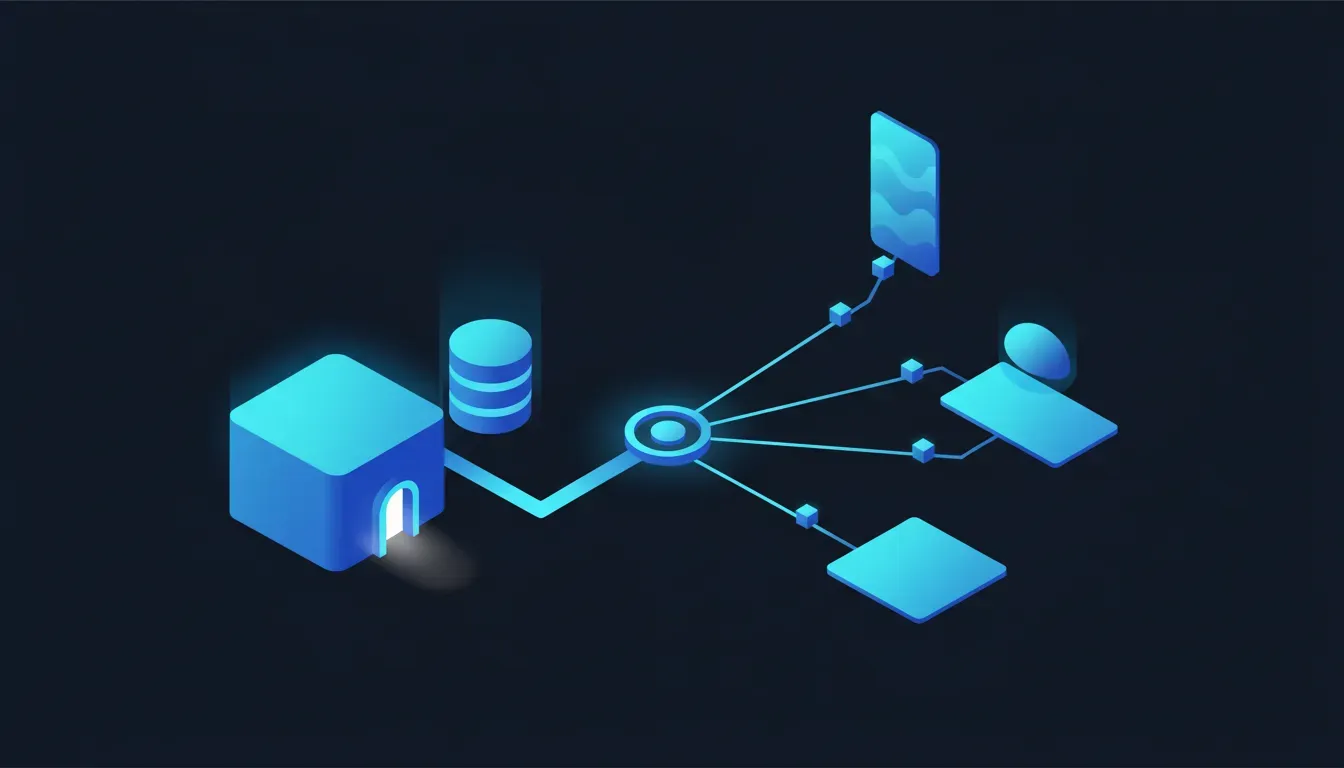
Because it changes what the integration is worth. A year ago, every new place to sell meant a new connector, a new feed format and a new set of rules. If UCP holds, the work is done once and each new surface becomes a question of being selected, not of building again. Two unrelated companies required it within twenty-four hours of each other, one for a search answer and one for a video feed. That is how a standard starts to look like infrastructure.
For most Shopify stores the plumbing is the platform's job, and Shopify co-developed UCP, so this is mostly good news. On other platforms it depends on your vendor's plans, and Google's own help page tells merchants on third-party platforms to ask them directly. On WooCommerce or a custom stack, "does our platform speak UCP, and when" is now a question with two concrete answers attached to it.
What does the assistant say about your product?
This is the part that is already yours. Picture the moment TikTok is designing for. Someone is watching a video of your jacket. They tap, a chat opens, and they ask whether it runs small and whether it will arrive by Friday. The ad paid for the view. What happens next depends on whether the assistant can answer from what you provided. If your size guidance lives in an image of a chart, if your shipping times are in a PDF linked from the footer, or if stock is only accurate on the product page and not in the catalog you sync, the assistant has nothing to say. A shopper in a video feed does not go looking for your FAQ. They scroll.
Google's hub raises the same question in a different place. Its help page tells merchants to have robust product data and feeds in place and warns that Merchant Center will flag missing feed attributes, returns details or account settings during onboarding. The protocol moves the cart. Your data decides what the shopper hears before they put anything in it.
The two conclusions that both get this wrong
It is a TikTok thing, and we are not a TikTok brand
Maybe you are not, and you should not start making videos because of this announcement. But the lesson is not about TikTok. It is that a protocol you may already have through your platform is now accepted by two very different surfaces, and the next one will not ask whether you are a video brand. Treat the question as "is our product data good enough to be answered from, anywhere", not "should we be on TikTok".
Get on the list now, whatever it takes
Both programs are selective tests with no launch dates, and one of them is not available in Canada until next year. Building a custom UCP integration this quarter to jump a queue you cannot see is the expensive way to learn what your platform would have shipped anyway. The better move is to make sure that when your platform's integration arrives, the catalog behind it is ready to be read.
What is worth doing this month?
- Ask your platform one question in writing. "Do you support UCP, and are you part of TikTok Buy Direct and Google's Merchant Center hub? When, and in which countries?" Shopify, Salesforce and Stripe are named partners. Everyone else owes you an answer too.
- Move sizing out of images. Fit notes and size charts that only exist as pictures cannot be quoted by an assistant. Put the essentials in text on the product and in the catalog fields you sync.
- State delivery and returns in plain words. Shipping times by region and your returns window should be readable text, not a PDF or a pop-up. These are the second and third questions every shopper asks.
- Check that stock is right in the feed, not just on the page. An assistant that confirms availability from a stale feed sells something you do not have.
- Decide where you want the checkout to happen. When Google's hub reaches you, cart transfer keeps the final step on your site and native checkout keeps it on Google. That is a choice about your checkout experience and your data, and it is easier to make before the switch is in front of you.
- If you are in Canada, plan for next year and use the time. The data work above is the same in every market, and it is the slow part.
The genuinely encouraging part
Two years ago, selling inside someone else's app usually meant giving up the customer: their checkout, their data, their rules. Both of this week's announcements go the other way. You stay the merchant of record, you keep the order and the relationship, and the integration is a shared standard that your platform is likely to provide rather than a bespoke connector per channel. The only thing neither TikTok nor Google can supply is accurate, readable facts about your products. That is work most stores can finish well before either door opens to them.
Where we fit
Every assistant in this story answers shoppers from the same place: the product facts you publish and sync. Our free AI Shopping Visibility audit looks at your store the way these agents do. We check whether sizing, delivery, returns and stock are written somewhere a machine can read them, whether your feed and your pages agree, and what an assistant would say today if a shopper asked it about your bestseller. You get a prioritised list of fixes in a few business days, with no sales call. It is the cheapest way to make sure that when a video sends someone to ask about your product, the answer is one that sells it.
Sources
- TikTok for Business — TikTok's agentic solutions (the primary announcement: Buy Direct, Shopping Assistant answering "based on information provided by the merchant", the UCP requirement, brands as merchant of record, the partner list and eligibility-based testing)
- Salesforce — Turn TikTok Scrolls into Sales: Inside Our New Agentic Commerce Partnership (5 October 2026, for what merchant of record means for customer data and the Q1 2027 phased rollout of UCP-powered checkout)
- PYMNTS — TikTok Kicks Off Agentic Commerce Push With AI Shopping Assistant (5 October 2026, independent summary of the launch)
- The Next Web — TikTok adds an AI shopping assistant and one-click checkout to its app (for the questions the assistant handles, the absence of a launch date and the TikTok Shop sales estimate)
- Forkast — TikTok's Agent Checkout Enters the Race, Inside the Feed, Not on the Merchant Site (for the Advertising Week context and US-only testing)
- Google Merchant Center Help — How to onboard to the UCP integration hub in Merchant Center (the capabilities, the implement-then-apply order, the interest form, the advice to merchants on third-party platforms, and "Australia and Canada to follow next year")
- Google — UCP integration hub in Merchant Center (cart transfer, native checkout and account linking as selectable features, with sandbox testing and diagnostics)
- PPC Land — Canada and Australia face 2027 wait for Google's Merchant Center UCP hub (for the earlier "coming months" wording and the shifted timeline)
- Universal Commerce Protocol — ucp.dev and Shopify Engineering — Building the Universal Commerce Protocol (what UCP is and Shopify's role in it)
- JTS Tech Services — Google built a cart that spans every store (29 July, the shopper side of Universal Cart)
- JTS Tech Services — The checkout is leaving your website: ACP, UCP, and what to actually do (background on the checkout protocols)