Written by Jeremy Souffir Founder, JTS Tech Services

The short version: Google announced Universal Cart at I/O in May 2026 and has been rolling it out across Search and the Gemini app in the US through the summer, with YouTube and Gmail to follow. It's a single cart that holds items from many retailers at once. The shopper checks out in a few taps with Google Pay, or transfers the items to your site to finish — and either way, the brand stays the merchant of record. Launch partners include Nike, Sephora, Target, Ulta Beauty, Walmart, Wayfair, and Shopify merchants such as Fenty and Steve Madden. The useful news for everyone else is that the technical integration is mostly not your job. The data quality is.
How is this different from the checkout story two weeks ago?
Fair question, and worth answering directly, because we published a piece earlier today arguing that in-chat checkout retreated and shoppers came back to merchant sites to buy. Both things are true, and the difference is who owns the relationship. What stalled was a model where the AI platform rebuilt checkout itself and became the counterparty. What Google is doing is a cart that aggregates across stores while leaving you as merchant of record — you keep the customer, the data, the returns, and the post-purchase experience. It's aggregation at the discovery and cart layer, not a replacement for your store.
That's a meaningfully better deal for merchants than the version that didn't work. It is not a free one, and we'll get to the catch.
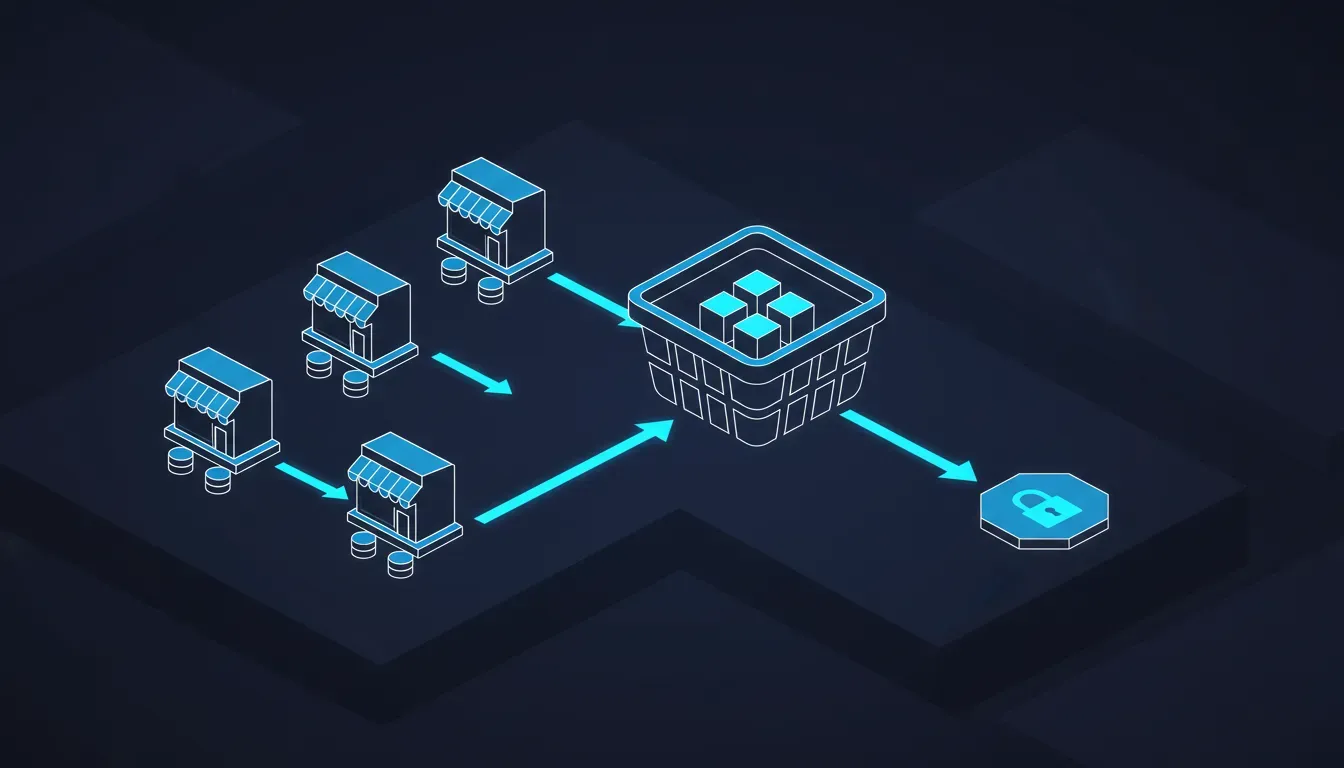
What does the cart actually do?
More than hold items. It runs on Gemini models, which is what separates it from a wishlist — it reasons about what's in it. Google's own example is flagging that two PC components from different retailers aren't compatible and proposing an alternative. Alongside that, it tracks price drops, surfaces deals and loyalty or payment perks, and tells shoppers when something out of stock comes back.
Underneath it is UCP, the Universal Commerce Protocol — an open standard Google developed with Shopify, Target, Walmart, Etsy, and Wayfair among others, so that AI agents can talk to merchant backends for discovery, checkout, and post-purchase without a bespoke integration each time. If you read our explainer on ACP and UCP, this is that plumbing showing up as a consumer product.
Do I need to build anything?
Probably less than you think, and the answer depends on your platform.
- On Shopify: largely handled for you. Shopify says products are discoverable by default through Agentic Storefronts — across ChatGPT, Microsoft Copilot, AI Mode in Google Search, and the Gemini app — with no separate integration or app, and no transaction fee beyond standard processing rates
- On Google's side: products need to be in Merchant Center with checkout eligibility. That's a feed and policy question, not a development project
- Off-Shopify platforms: you either integrate UCP directly, choosing a native or embedded checkout path with tokenised payments, or use a route like Shopify's Agentic plan to get your catalogue into the same channels
- Geography still gates a lot: UCP-powered checkout on Google's surfaces started with eligible US merchants, with Canada, Australia, and the UK announced as expansions
Where the real work is
Notice what's missing from that list: almost no engineering. Inclusion is decided by whether your feed is complete, accurate, and eligible — correct availability, correct price, real shipping and returns data, attributes that don't contradict each other across your catalogue. That's the same unglamorous work that determines whether an assistant recommends you at all. It's the least exciting lever in commerce and currently one of the highest-leverage.

So what's the catch?
Google sits between you and the shopper at the moment of comparison. Wharton's Kartik Hosanagar put the structural point bluntly in trade coverage of the launch — whoever controls the agents holds the power — and the concern analysts keep raising is that a cross-retailer cart makes Google the place where the choice gets made, with retailers seeing less of the journey that led there.
The wrong lesson to draw
Sitting it out on principle. Refusing to be in the cart doesn't stop the cart existing; it just means your competitor's product is the one in it when the comparison happens. The realistic posture is to participate and stay un-substitutable — own the direct relationship after the first purchase, keep the reasons to buy from you on your own site, and make sure the data the agent reads about you is better than the data it reads about the alternatives.
What to check this week
- Confirm your Merchant Center feed is live and checkout-eligible — not just present, but passing policy and complete on the attributes that matter
- Spot-check availability and price accuracy against your store for your top sellers; contradictions are what get you dropped from consideration
- Fill in shipping and returns data properly. Agents weigh it, and blank fields read as risk
- Extend structured data past the bestsellers into the long tail, where specific comparison questions actually get asked
- Split AI and agent-referred traffic out in analytics now, so you can tell whether any of this is working in three months
If you'd like to know where your catalogue actually stands before you spend a quarter on it, that's what our free audit is for: we read your store the way the assistants do and come back with a prioritised list of what's thin, wrong, or contradictory — starting with the products carrying your revenue.