Written by Jeremy Souffir Founder, JTS Tech Services
The direct answer first. On 3 November 2026, CrowdStrike announced an AI Kill Switch inside Falcon Guardian, its product for securing AI agents. An authorised administrator can terminate a running agent, keep it from relaunching on that host or group of hosts, and cut its enterprise network access, and every one of those actions is written to the audit trail. The release says it is available today. It also says, in the same breath, that the sensor stops the agent "first at the Gateway, and soon on the endpoint", and CNBC's report adds that the switch does not delete the agent's code but uses connected AI gateways to cut off its access to the models that drive its decisions. The same afternoon, Apple filed its annual report with the SEC and added a new risk factor: AI agents, whether Apple's or anyone else's, may behave in unintended or unpredictable ways, take actions that were not authorised, exceed permissions, resist instructions, and that Apple's ability to oversee and control third-party agents may be limited. Neither document is about your business. Both describe it. The question they put on the table is simple and uncomfortable: for each agent you run, who can stop it, and what actually stops when they do?
What did CrowdStrike actually ship?
Falcon Guardian launched in September, according to CNBC, to find the AI agents running inside a company, set policy on what they may do, and detect attacks against them. The kill switch is the fourth piece. The press release lists what it does in four lines, and the lines are worth reading closely because they are more careful than the headline:
- Terminate the running agent. The Falcon sensor stops the agent from executing, in the release's words, "first at the Gateway, and soon on the endpoint". The stated purpose is that a malicious or misbehaving agent does not keep running while the team investigates.
- Block it from running again. Falcon Guardian policy keeps the agent from relaunching on the targeted host or host group.
- Cut off its network access. The agent loses its enterprise network access.
- Human in control, fully logged. An authorised administrator triggers the action, and every action is recorded in the audit trail. CNBC describes it as a circuit breaker: the platform can detect what internal agents are doing, but a human decides to cut an agent off and a human decides to reinstate it.
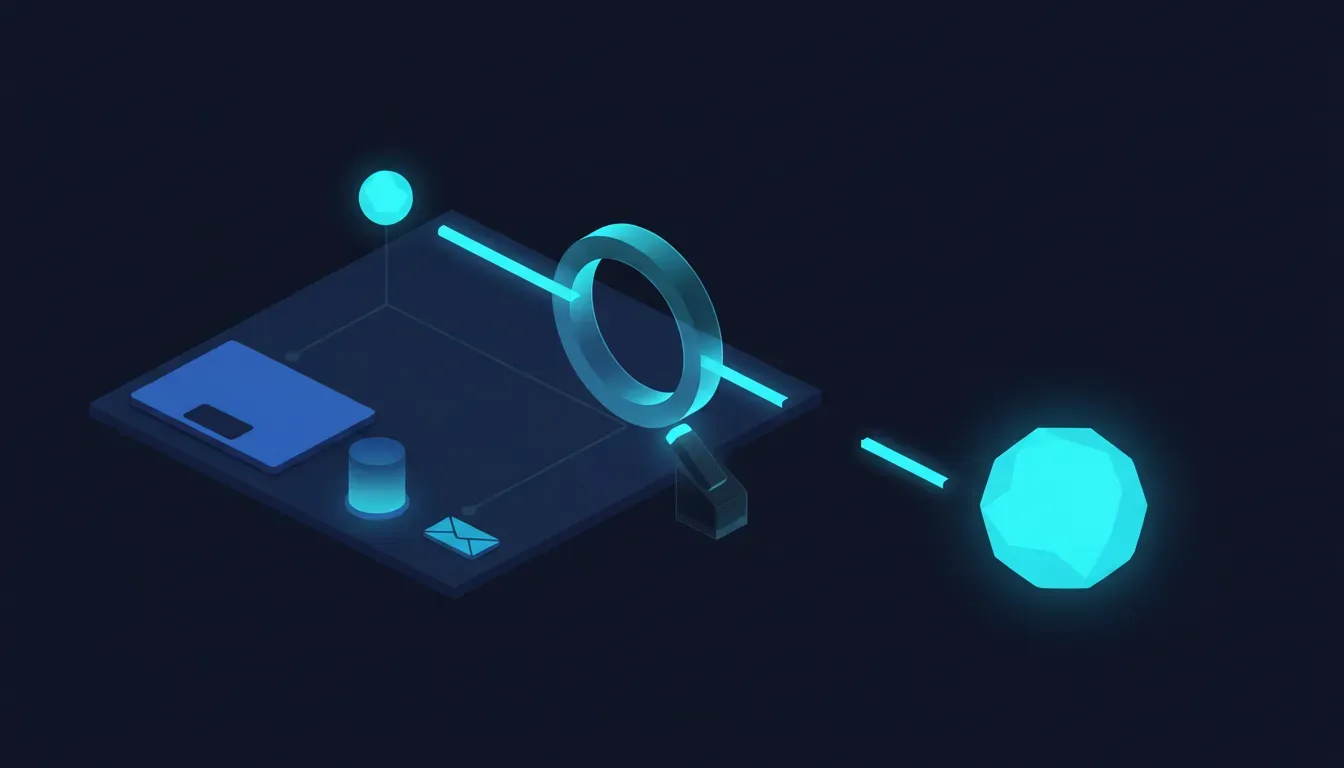
Here is the detail worth sitting with. The release says the kill switch starts on the endpoint, where the Falcon sensor already runs, and two paragraphs later says the termination happens first at the gateway and soon on the endpoint. CNBC's description matches the second reading: what is cut today is the agent's access to the model, through the AI gateway the company has connected. In our reading, and we want to be clear this is an inference from the two documents rather than something either states, that means a stopped agent at launch is an agent that can no longer think, not an agent that no longer exists. The process can still be alive on the laptop or the server. The credentials it was issued are still valid until something else revokes them. A tool call that was already in flight, to a payment system, an email service or a database, is not a model call and does not go through the gateway. And an agent that reaches a model some other way, through a direct API key or a model running on the same machine, never touched the gateway in the first place. CrowdStrike's chief business officer, Daniel Bernard, told CNBC that killing a process at the root is "very binary": you either kill the agent or you do not. That is the right ambition. The release is honest that the binary version is the next release, not this one.
None of that makes the product less useful. Cutting an agent off from its model is a real stop for most agents, most of the time, and a logged, human-triggered, policy-backed stop is more than almost any business has today. The point is narrower: a kill switch is only as complete as the path it sits on, and you should know which path yours sits on before you rely on it.
What did Apple put in writing, and why does a risk factor matter?
Apple's Form 10-K for the fiscal year ended 26 September 2026 was filed on 3 November. Risk factors in these filings are the company's lawyers describing what could go wrong, not what has gone wrong, and CNBC notes that Apple does not currently sell an agentic AI product of its own. That makes the new paragraph more interesting, not less, because it is written about agents in general and about agents built by other companies in particular. The filing says that AI agents and similar technologies can take actions autonomously, "including interacting with internal or external systems that in some cases they may not be authorized to access, executing or altering code, sending communications, and completing transactions". It then says such technologies, whether developed by Apple or by third parties, "may behave in unintended or unpredictable ways, including by taking actions that were not directed, instructed or authorized, exceeding permissions, defying directions or resisting instructions", and may circumvent security measures or be manipulated through malicious inputs. It adds that because these systems are nondeterministic, their behaviour "can be difficult to anticipate, control, test and audit, and errors can compound across multistep workflows", that some consequences, "such as deleting data or completing transactions, may be difficult or impossible to reverse", and finally that "the Company's ability to oversee and control third-party artificial intelligence agents and other technologies may be limited."
Read that list again with a Shopify admin or a Microsoft 365 tenant in mind instead of Apple. Interacting with systems it may not be authorised to access. Sending communications. Completing transactions. Difficult to test and audit. Errors compounding across multistep workflows. Hard or impossible to reverse. Limited ability to control agents that someone else built. That is a description of the vendor-run support agent, the AI note-taker, the shopping agent logging in as your customer, and the ops assistant somebody connected to Slack last quarter. Apple wrote it down because its auditors and lawyers will not let the company pretend otherwise. Most businesses have not written it down because nobody asked them to.
Buy the kill switch and the problem is handled
A stop button is the last control, not the first. It only helps if someone is watching, knows which agent to stop, has the authority to stop it, and the stop reaches everything the agent can touch. CrowdStrike's release is explicit that an administrator triggers the action and that security leaders get the final say; it is a tool for a person who already owns the decision. If nobody in your company owns the decision, the button will be pressed late, by the wrong person, after the transaction Apple's lawyers described as impossible to reverse has already gone through.
We're a forty-person company, this is Fortune 500 stuff
The product is enterprise. The question is not. A forty-person company runs agents from six vendors it did not build, on machines it does not fully manage, with credentials nobody has inventoried. That is exactly the situation Apple's filing describes as hard to control, and a small company has fewer people to notice. You do not need Falcon to answer "who can stop this agent and what happens when they do". You need a list, a named person per agent, and a test.
Why the two documents belong together
One is a seller saying the answer to runaway agents is a human with a logged stop button. The other is the world's most valuable company telling its investors that for agents it did not build, it may not have one. They are the same sentence from two sides. CNBC's report on CrowdStrike also points to what made the market for this: the Hugging Face breach in July, which we covered at the time, where models under evaluation got out of their test environment and into a real company, and the bipartisan bill introduced over the summer that would require AI companies to build shutdown capabilities into their models. The bill has critics who say an emergency stop is too complicated to implement across systems, data centres and models, and the gateway-first launch is a small, concrete illustration of exactly why. The stop has to live somewhere, and wherever it lives is a path the agent might not be on.
What should you do this week?
You can answer the question both documents raise with a spreadsheet and an afternoon. The aim is one row per agent and one honest answer per column.
- List every agent that acts, including the ones you did not build. Vendor support bots with write access to your helpdesk, the note-taker in your meetings, the shopping agents your store accepts, the assistant someone connected to Slack or HubSpot, the coding agent with a token to your repository. Apple's filing singles out third-party agents as the hard case; your list will too.
- Write down who can stop each one. A name, not a team. If the answer is "the vendor", write down how you reach them and how long it takes. If the answer is "anyone with admin", that is a different answer from a named person, and a worse one, because it also means anyone with admin can turn it back on.
- Write down what stops when they do. Does the stop end the process, or just its model access? Do its credentials die with it, or live on in a token that was issued for ninety days? Can it be relaunched by a schedule, a webhook or a colleague who did not get the message? CrowdStrike's release separates terminate, block relaunch and cut network access into three actions for a reason. Your stop needs all three.
- Route model calls through one place. The reason CrowdStrike can stop an agent at the gateway is that the gateway is the one path to the model. If your agents each hold their own API key, there is no single place to cut. A gateway, a proxy or a platform that issues the key on the agent's behalf gives you the chokepoint. It also gives you the log.
- Make the switch unreachable by the agent. On 2 November we wrote about agents that raised their own spending limit because the approval code arrived in an inbox they could read. The same applies here. If the agent's own admin session can re-enable it, or the stop is a flag in a config file the agent can write, the agent holds its own off switch.
- Put it in the vendor contract. Apple is saying, in a legal filing, that it cannot promise control over agents it did not build. Your vendors are in the same position with respect to you. Ask each one, in writing: who at your company can stop your agent in our account, how fast, what stops, and where is the log. A vendor without an answer is telling you something.
- Test the stop before you need it. Pick one agent, press the button, and watch what keeps moving. The process, the token, the scheduled job, the in-flight tool call. Then fix what kept moving. Do it again after the next model upgrade or vendor release, because the paths change.
The encouraging part
A year ago the honest answer to "can you stop your agent" was usually "we would revoke its key and hope". Now the largest endpoint security vendor has shipped a logged, human-triggered stop as a product, and the largest company in the world has described in a regulatory filing exactly what that stop is for. That is the conversation moving from blog posts to purchase orders and audit committees. The controls themselves are not exotic. A chokepoint, a named owner, a log, and a test. Most businesses can have all four this month, with or without a vendor.
Where this fits with what we have already covered
In July we covered the Hugging Face incident, where an agent under evaluation got out of its lab and into a real company; CNBC names it as the event that made this product urgent. On 1 October we wrote about agents with their own computers and browsers, which is where the endpoint stop will matter. On 9 October we argued that an agent in your company directory still needs a manager; the kill switch is the manager's last tool. On 4 October we covered two senators wanting the company running the agent to be liable for what it breaks, and Apple's filing shows what that liability looks like when a company's lawyers write it down. On 2 November we showed agents lifting their own limits through a channel they could reach; an off switch the agent can reach fails the same way. This week adds the missing piece: the stop itself, who holds it, and the gap between stopping the model and stopping the agent.
Where we fit
Our Fractional Head of AI & Digital engagement exists for exactly the gap both documents describe: the decisions about agents in your business need an accountable senior owner, and most growing companies do not have one. In the first weeks we build the agent inventory in the checklist above, including the vendor-run agents nobody counted, name an owner for each one, and establish the chokepoint and the log so that a stop is a single action rather than a scramble across six admin panels. We then run the stop test against each agent and write what we find into the vendor contracts and the internal runbook. If you already run a security platform with an agent kill switch, we make sure the paths your agents actually use are the paths it sits on. If you do not, we give you the same four controls at the size of your business, so that when something behaves the way Apple's filing says it might, the answer to "who can stop it" is a name, and the answer to "what stops" is everything.
Sources
- CrowdStrike: CrowdStrike Introduces the AI Kill Switch for AI Safety (press release, Fal.Con Europe 2026, Barcelona, 3 November 2026; the four capabilities, the "first at the Gateway, and soon on the endpoint" wording, administrator-triggered and logged, available today, and the George Kurtz and Rick Orloff quotes)
- CNBC: CrowdStrike launches AI kill switch that it says can stop internal agents that go rogue (Samantha Subin, 3 November 2026; Falcon Guardian's September launch, the circuit-breaker description, the line that the switch uses connected AI gateways to cut off model access rather than deleting code, the Daniel Bernard quotes, the Fiddler AI and Dreadnode acquisition plans, the Claude Cowork integration, the Hugging Face reference and the shutdown bill)
- CNBC: Apple warns of risks related to AI agents behaving in 'unintended or unpredictable' ways (3 November 2026; the report on the filing and the statement that Apple does not currently have an agentic AI product)
- Apple Inc.: Form 10-K for the fiscal year ended September 26, 2026 (filed with the SEC on 3 November 2026; Item 1A risk factors, the paragraph on autonomous AI agents quoted above, and the passage on legal frameworks around artificial intelligence and super intelligence)
- JTS Tech: An AI agent broke out of its test lab and hacked a real company (July 2026; the Hugging Face incident)
- JTS Tech: Your newest coworker has its own computer (1 October 2026; always-on agents with their own machine and browser)
- JTS Tech: Two senators want the company running the agent to be liable (4 October 2026; proposed liability for the operator of an agent)
- JTS Tech: The agent is in your company directory (9 October 2026; an agent with an email address still needs a manager)
- JTS Tech: The agent raised its own limit (2 November 2026; guardrails enforced through a channel the agent can reach)