Written by Jeremy Souffir Founder, JTS Tech Services
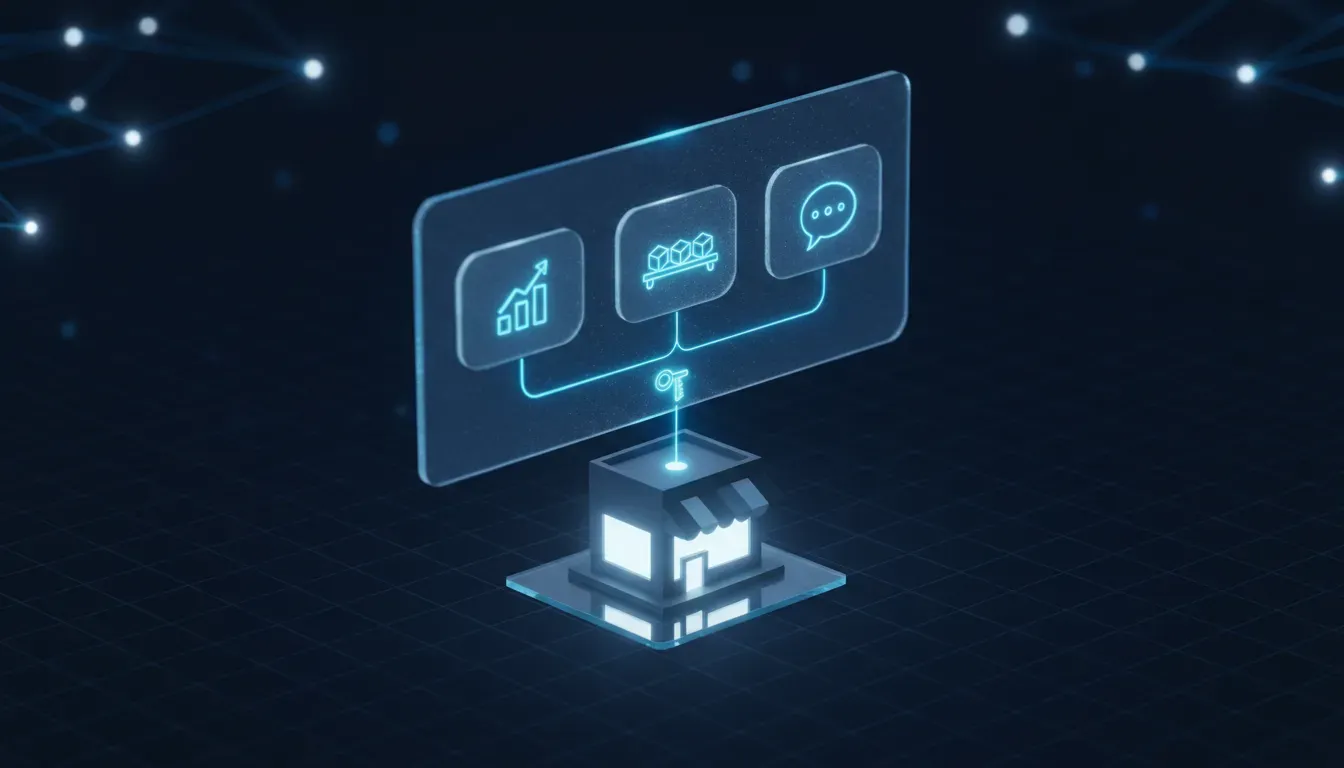
The direct answer first. No, you cannot claim your business in ChatGPT today, and OpenAI has not said that you will be able to. What happened on 6 November 2026 is that Juozas Kaziukėnas, an e-commerce analyst who has been watching ChatGPT's commerce features closely, posted a screenshot on LinkedIn of a banner he saw inside ChatGPT. The banner's three cards read, in full: "See how your business shows up: Track how often your business is mentioned in ChatGPT conversations." "Show customers what you offer: Add your latest products and keep your business info up to date." "Help customers make decisions: Let your business agent answer their questions with context you control." Search Engine Roundtable's Barry Schwartz reported it the same morning under the description "Claim your business in ChatGPT", and Search Engine Land followed with a report that OpenAI is testing tools for businesses to track their performance inside ChatGPT. According to Kaziukėnas, the analytics show how many times a business appeared in ChatGPT responses and how many clicks went to its website, as a daily chart; the whole thing is part of a larger feature he calls a Business Hub; it is available only to businesses that have verified their ownership, for example by connecting their Shopify store; he first saw its early steps in August; and it shows no prompts, no user data, and no competitor benchmark or ranking. That is the entire body of evidence: one screenshot, one well-placed observer, two trade publications, and silence from OpenAI. We are not going to dress it up as a product. We are going to read it as what it is, which is the clearest statement yet of what ChatGPT intends to ask a business for, and in what order.
What exactly was seen, and what was not?
Because the gap between a screenshot and a launch is where expensive mistakes get made, here is the ledger.
- Seen: a banner inside ChatGPT with three cards, quoted above, about tracking mentions, adding products and business information, and a business agent that answers with context the business controls. The screenshot is published in the Search Engine Roundtable article.
- Seen, per Kaziukėnas: a daily chart of impressions, meaning the number of times the business appeared in ChatGPT responses, and clicks, meaning clicks on links to the business's website.
- Stated, per Kaziukėnas: the feature is a work in progress whose first steps he saw as early as August, it seems close to launch, it is part of a larger Business Hub, and it is only available to businesses that have verified ownership, with connecting a Shopify store given as the example.
- Stated, per Kaziukėnas: it does not show prompts, user data, or any kind of competitor benchmark or ranking.
- Not seen: anything from OpenAI. No blog post, no help-centre article, no launch date, no list of countries, no pricing, no statement about who qualifies. Search Engine Roundtable's wording is that OpenAI "is developing" the tool, which is the author's framing of the sighting, not a company statement.
- Not seen: citations. The Roundtable headline says the tool is for analytics and citations, but neither the article body nor the original post mentions citation reporting. Read "mentions" and "impressions" as the words actually on the screen.
- Not seen: a path for a business that does not run a Shopify store. Shopify is given as an example of how ownership can be verified, not as the only way, and nothing says what a WooCommerce store, a B2B company or a service business would connect instead.
Why does "verified ownership" matter more than the chart?
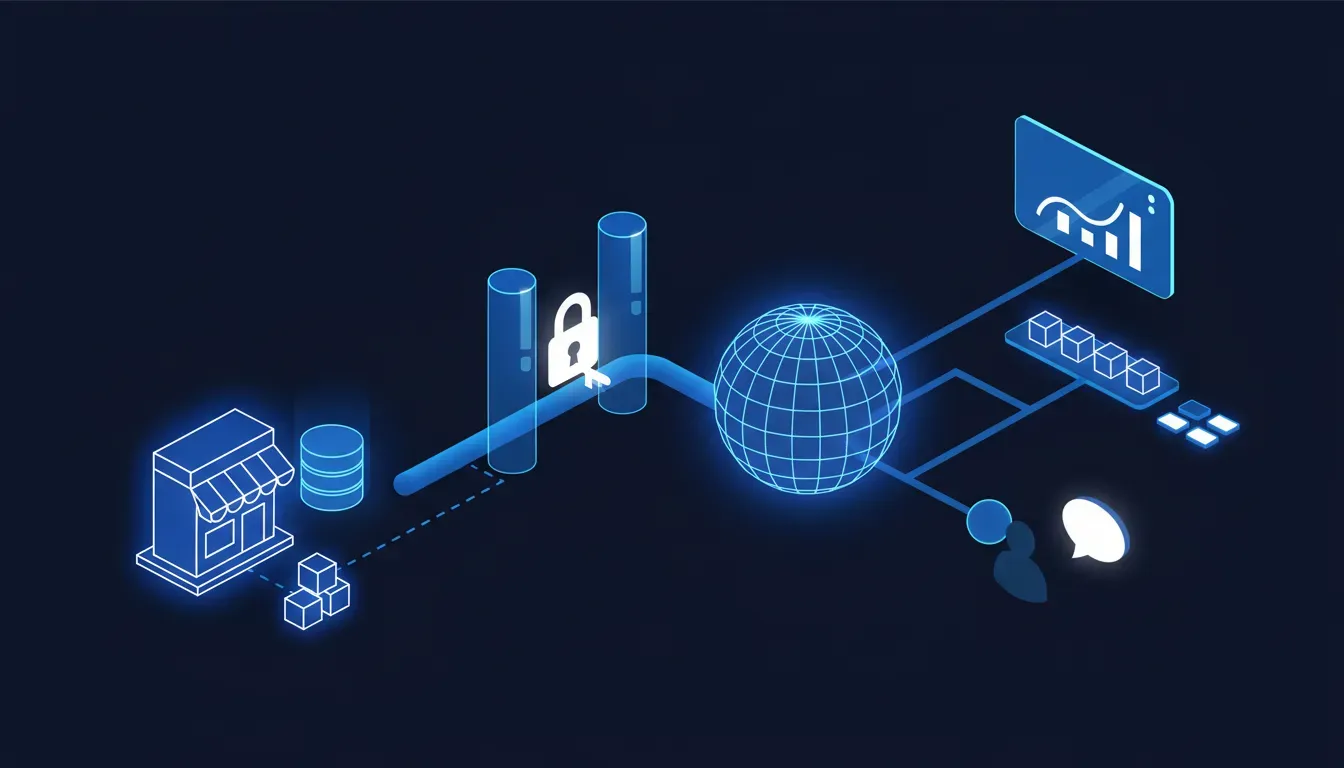
Most of the coverage so far has treated this as a Search Console for ChatGPT, and the analytics half of it is. But look at where the gate is. Google verifies that you own a website by having you prove control of the domain, a DNS record or a file on the server, and once you have done that you see your Search data, including the AI Overviews and AI Mode impressions it opened up to every site on 31 August. The ChatGPT sighting ties verification to something different: the commerce connection. Connecting your Shopify store is the example given. That is not an arbitrary choice. On 21 September we reported OpenAI telling Shopify merchants that their products were "already integrated through Shopify Catalog", which is the same product data that ChatGPT's shopping answers draw from and that its ads are built from. A business that has already connected its catalogue is a business whose identity, products and prices ChatGPT already holds; verifying ownership through that connection costs OpenAI nothing and tells it the claimant is real. Our reading, and it is our reading: the first businesses able to claim themselves will be the ones already in the product-feed programme, which today means Shopify merchants above all. If you are one, you are near the front of the queue without having done anything. If you are on WooCommerce, or you sell services, or you are a B2B company whose products never sat in a shopping feed, the sighting gives you no door yet, and you should treat the next few weeks as the time to find out what one will look like.
What will the numbers tell you, and what will they not?
Two numbers, by day: how many times your business appeared in a ChatGPT response, and how many times a link to your website was clicked. Put those beside what you can measure today and the shape of the gift is clear. On 14 October we showed that since the GPT-6 rollout ChatGPT's clicks reach stores with no referrer and get filed under direct, so right now you cannot count the clicks at all. A clicks line from the source would fix that in one stroke. The impressions line is more interesting still, because of what we learned on 19 August: in the free mode most people use, ChatGPT opens no page at all in roughly 93% of answers, and when it recommends a product the card comes from a merchant feed, not from your website. Those appearances leave no trace anywhere you can see. An impressions count would be the first time a business could see how often it is being named in a place that never sends a visitor. Now the other half. No prompts. Google's report shows you the queries; this, per the sighting, shows you how often, not for what. You will know you were mentioned 400 times on Tuesday and have no idea whether that was 400 people asking for the best option in your category or 400 people asking whether your returns are a hassle. No competitor benchmark or ranking, so a flat line cannot be read as losing to someone or as the category going quiet. And no user data, which is the right call and also means you cannot segment anything. The honest summary is that the chart will tell you the size of a channel you currently cannot see, and nothing about its contents.
"Mentioned" is a word with no definition yet
The card says "how often your business is mentioned in ChatGPT conversations". The analyst's description says impressions are the number of times the business appeared in responses. Those may be the same count or two different ones: a brand named in a sentence, a product card shown from your feed, and a link to your page are three different events, and ChatGPT's product cards do not even come from your website. Until OpenAI publishes a definition, do not promise anyone in your company what the impressions line measures. Promise them that it exists.
What is the "business agent", and whose words does it speak?
The third card is the one that will matter most and get read least. "Let your business agent answer their questions with context you control." Three things in that sentence. There is an agent that speaks for your business inside ChatGPT. It answers customers' questions, so it is on the shopper's side of the conversation, not in your admin. And what it says is bounded by context you supply. We have seen two halves of this already. On 21 September we reported that OpenAI was piloting an ad format that opens a conversation with the advertiser's own agent; this card describes the same idea without the ad. And on 31 October we covered Shopify moving its knowledge base into the admin: one page where the facts AI agents are given about your store, from return windows to who to call, are drafted by Shopify from your own pages and wait for you to approve them, with room for a thousand of them. The ChatGPT card is the other end of that pipe. Whether it reads Shopify's facts directly, asks you to type your own, or both, the sighting does not say. What it does say is that the business, not the model, controls the context, which is the single most important design decision in this whole screenshot. It means that the day the button appears, the quality of what ChatGPT's agent says about your store will be a direct function of what you have written down, and a store with a thin, out-of-date or contradictory set of facts will have an agent that is thin, out of date and contradictory in front of a buyer. That is the same lesson as Visa's benchmark on 6 November, which found agents deciding wrongly a little under half the time and buying anyway: the facts the agent never asked about are the ones you have to volunteer. This card is where you volunteer them.
We'll deal with it when it launches
Every one of the three cards depends on something you prepare in advance. Verified ownership depends on a connection that may already exist or may need setting up. The product card depends on a catalogue that is current, which yours may not be. The agent card depends on a written set of facts that most stores have never produced. None of that is done in an afternoon, and all of it is done better with no deadline. The launch is the deadline.
The chart will tell us what to fix
It will tell you how often you appeared and how often you were clicked. It will not tell you what people asked, which products they saw, or what the agent said. A number without a cause is a worry, not a plan. The 19 August research into what ChatGPT reads, and a read of your own pages the way the model reads them, are still how you find out why the line moved.
What should you do this week?
Nothing here requires the feature to exist, and all of it is worth doing even if the banner never ships.
- If you are on Shopify, check whether your store is already in the product-feed programme that ChatGPT draws from. The sighting names a connected Shopify store as the example of verified ownership, so your eligibility for Shopify Catalog is, for now, the best proxy for your eligibility to claim. The admin shows whether you qualify and what is blocking you; we covered the eligibility view on 31 October.
- If you are not on Shopify, write down today which of your systems holds the authoritative version of your products and your business facts, because something will have to be connected or uploaded, and you want to know which system it is before someone asks.
- Write the fact sheet. Return window, shipping regions and times, warranty, who to contact, what you do not sell, the five questions your support inbox gets every week. If you are on Shopify, this is the knowledge base page and it is drafted for you; approve it, correct it, cut what is wrong. If you are not, a plain document will do for now. This is the "context you control". Have it before anyone asks for it.
- Fix the catalogue before the catalogue is the claim. Current prices, correct stock, compatibility facts in text rather than in an image, a complete returns statement on every product. The second card says you will add your latest products and keep your business info up to date; the first version ChatGPT sees should be one you would stand behind.
- Set your baseline now, with the tools that exist. Microsoft Clarity's agent dashboard, which we covered yesterday, shows agents that load your page; Shopify's Agentic channel shows orders that arrive without one; your analytics direct bucket holds ChatGPT's clicks in disguise. Write the three numbers down with a date. When an impressions line appears, you will want something to compare it to.
- Decide who owns it. Someone in your company owns Search Console. Someone owns Merchant Center. Someone, probably the same person, will be handed a ChatGPT console with a chart that can be misread in both directions and a fact sheet that will be quoted to customers. Name that person before the invitation arrives, not after.
- Be suspicious of anyone offering to do it for you this month. A banner that OpenAI has not announced is exactly the kind of thing that turns up in a sales email as "claim your ChatGPT listing before your competitors". Nobody can claim it for you today, and a request for your admin credentials to do so is a request to be declined. When the real thing arrives it will arrive inside ChatGPT or inside a platform you already use.
The encouraging part
For two years the honest answer to "how often does ChatGPT mention us" has been that nobody outside OpenAI knows. This screenshot is the first sign that the answer is going to be a chart in your own account. The design choices visible in it are the right ones: the business proves it is real before it sees anything, it keeps its own facts current, and it controls what an agent says in its name. None of that favours the biggest brand. It favours the store whose data is in order on the day the button appears, which is a race a small team can win, because the work is a fact sheet and a clean catalogue, not a budget.
Where this fits with what we have already covered
On 19 August we traced what ChatGPT actually reads from a site and found that most answers never open a page and that product cards come from feeds, which is why an impressions count from the source would show you something no tool of yours can. On 1 September we covered Google opening its AI impressions to every site, the closest existing analogue. On 21 September we covered ChatGPT ads being assembled from Shopify Catalog, and the agent-conversation ad format that the third card echoes. On 14 October we showed ChatGPT's clicks arriving as direct, the attribution hole a clicks line would fill. On 31 October we covered Shopify's knowledge base, the likeliest source of the "context you control". And yesterday we covered Microsoft Clarity's agent dashboard, which measures agents from the store's side; this would measure appearances from ChatGPT's. Together they describe a channel that is becoming measurable from both ends at once.
Where we fit
Our Fractional Head of AI & Digital engagement exists for the situation this screenshot describes: a fourth console is about to join Search Console, Merchant Center and your analytics, each of them holding a different version of your business facts, and nobody in the company owns the set. In the first weeks we build that set: the single fact sheet your store will hand to every agent, checked against your actual policies and your actual catalogue, and the connection map that says which system is authoritative for products, prices, stock and policies and which platforms it feeds. We then put a named owner and a monthly review around it, so that when ChatGPT, Google, Microsoft or Shopify opens a new place to be claimed, the answer is a login and a document, not a project. If the catalogue itself needs the work, our AI Shopping Visibility service does the fixing, powered by our own CortexCommerce platform, whose CortexGuard app is live on the Shopify App Store. The chart, when it comes, will tell you how big the channel is. Owning the facts behind it is what decides whether the number is good.
Sources
- Search Engine Roundtable: OpenAI Working On ChatGPT Tools For Business For Analytics & Citations (Barry Schwartz, 6 November 2026; the "Claim your business in ChatGPT" description, the three card strings quoted in full, the screenshot, and the "is developing" framing)
- Juozas Kaziukėnas on LinkedIn: ChatGPT is building an analytics tool to track how often your business is mentioned (6 November 2026; the original sighting, impressions and clicks as a daily chart, the Business Hub name, verified ownership with a connected Shopify store as the example, first steps seen in August, and the no prompts, no user data, no competitor benchmark or ranking statement)
- Search Engine Land: OpenAI testing business tools to track performance within ChatGPT (6 November 2026; the second trade report of the sighting)
- JTS Tech: What ChatGPT actually reads from your site (19 August 2026; 93% of free-mode answers open no page, product cards come from feeds)
- JTS Tech: Google now shows your AI impressions (1 September 2026; the Search Console analogue)
- JTS Tech: ChatGPT ads are built from your catalog (21 September 2026; "already integrated through Shopify Catalog" and the agent-conversation ad pilot)
- JTS Tech: ChatGPT's visits now arrive as direct (14 October 2026; the click-attribution gap)
- JTS Tech: What the agent says about your returns (31 October 2026; Shopify's knowledge base and the Catalog eligibility view)
- JTS Tech: The agent got it wrong and bought anyway (6 November 2026; Visa's benchmark)
- JTS Tech: The agents are in your analytics now (7 November 2026; Microsoft Clarity's agent dashboard)