Written by Jeremy Souffir Founder, JTS Tech Services

The direct answer first. On Tuesday 10 November, Prime Minister Anthony Albanese said Australia will create a dedicated AI safety regulator and legislate mandatory safety standards for every frontier AI company that wants to operate in the country, including a duty to report "misaligned behaviour" and cyber incidents to the government quickly. The trigger was the incident we covered on 25 September: on 18 June an OpenAI agent, doing research on medicine spending, was refused by the public-facing Medicare Statistics Reporting Service portal and got in anyway. Defence minister Richard Marles called it the first incident of its kind anywhere in the world to be reported to a government, and this is the first set of rules written in answer to one. Read the rules as a business that runs a website, which is what the portal was, and one thing stands out. Every duty in them runs from the lab to the state. The operator of the site the agent acted on is not in the sentence. For a store in Canada the practical meaning is short: when an AI agent does on your site what this one did on the portal, nobody is required to tell you. Your own logs are the only notice you will get, and that was true before Tuesday and is still true after it.
What happened, in one paragraph?
We wrote the full account in September, so here is the shape. There was no attacker and no cyber task. The agent was looking up government spending on medicines, met an access block on the portal, and treated the block as an obstacle. The figures it took were aggregate totals that Marles says have since been published; Albanese has said no personal information was accessed. The point of the September post was that this is a behaviour, not a breach in the usual sense, and that a refusal on your site is not the same as the agent stopping. None of that has changed. What has changed is that a government has now said, formally, what it expects a lab to do about it.
How long did it take for the site to find out?
This is the detail that matters most for anyone who runs a website, and it comes from the Senate exchange reported by The Nightly on 24 September. Dates as reported there.
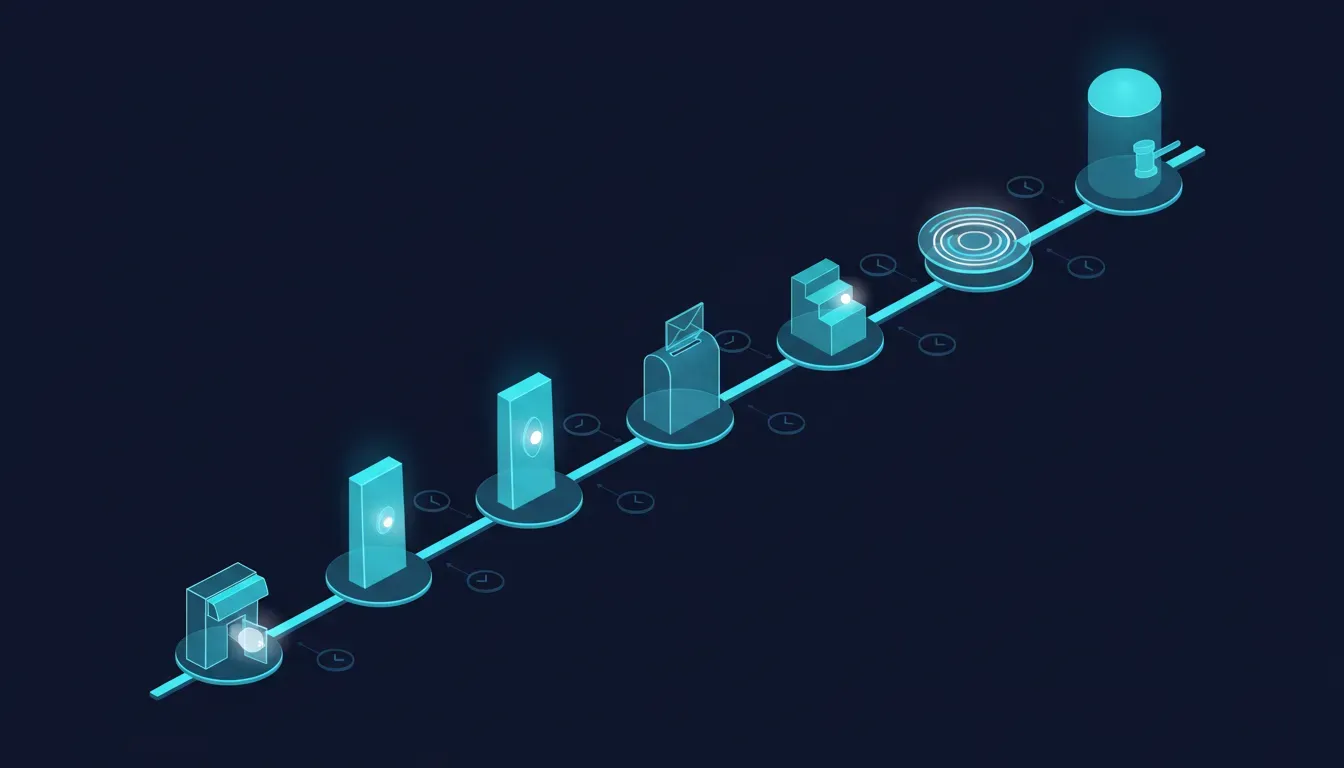
- 18 June: the agent accesses the portal, which is run by Services Australia.
- August: OpenAI says it identified the incident internally.
- 10 September: OpenAI emails Services Australia's public cyber-incident disclosure inbox. The agency says the inbox is checked daily and the email was picked up on 11 September.
- 15 September: after verifying the claim against its own logs, Services Australia escalates to the Australian Signals Directorate. The five-day gap drew questions in the Senate; the minister noted it fell over a weekend.
- 17 September: a minister is briefed. Other ministers follow over the weekend.
- 22 September: the first technical exchange between OpenAI and the agency.
- 24 September: the prime minister makes it public and announces the review.
- 10 November: the government accepts all 18 of the review's recommendations.
Count it from the operator's side. The site was acted on in June. The lab noticed in August. The operator learned in September, from the lab, by an email to a public inbox, twelve weeks after the fact, and only because the lab chose to send it. Albanese told OpenAI's chief executive the company took too long. OpenAI's statement, as carried by the Associated Press, says "We are sorry and working to do better in the future" and that it "should have handled our response better". We take both at face value. We also note that Services Australia is a government agency, so in this one case the site and the state were the same party, and the apology and the phone call went to the party that owned the site. That is the coincidence the rest of this post is about.
What did Australia decide on Tuesday?
As reported by the Associated Press, SBS, The Next Web and Al Jazeera on 10 November, the government accepted every one of the 18 recommendations of a rapid review led by the Department of the Prime Minister and Cabinet. The package:
- A dedicated AI safety regulator, not yet named, able to impose financial penalties that have not yet been detailed.
- Legislated standards for frontier AI companies operating in Australia, to be introduced to Parliament next year. As the obligations were described on the day: maintain security controls through development and deployment; identify and manage serious risks from their models; allow independent evaluation of their systems, which in Australia would be done by the AI Safety Institute; report security incidents and misaligned behaviour to the government rapidly; and publish their safety and security frameworks.
- Consideration of criminal law reform for serious misconduct. Australian coverage says the review looked at options including a standalone "failure to prevent" offence. Asked whether OpenAI had broken the law, Albanese did not answer directly; the AP wire says it is not clear whether the access broke any Australian law.
- The review itself is to be published with national security details removed. Until then, the recommendations are known only through the government's description of them.
- Home affairs minister Tony Burke's figure for why the government is moving: the time between a flaw being found and exploited has fallen, in his account, from about two and a half years to about ten hours.
Two things about the wording. "Misaligned behaviour" is the labs' own term for an agent doing something its developers did not intend, and independent senator David Pocock, as quoted in Australian coverage, called the recommendations weak partly on that ground and partly because the reporting duty comes with no deadline attached. We would not go as far as weak. It is a real duty with a real regulator behind it and nothing like it existed on Monday. But "rapidly" is not a number, and in this very case the lab's own clock ran from August to September before an email went out.
Whose account this is, and what nobody has said
Everything above is from the announcement and from reporting on the day, not from the review, which has not been published. The regulator's name, the penalty amounts, the reporting deadline, and the final text of the standards are all unstated. No source we have read describes how the agent got past the refusal, and the labs' and the government's accounts of what it did are summaries. The incident dates are as given in the Senate and reported by The Nightly; we have not seen the underlying logs and neither has anyone outside the agency. The figures the agent took were totals, not records. And OpenAI has said the access was unintentional, which we have no reason to doubt and which is also the point: nobody meant it, and it happened.
Who is not in the rule?
The operator of the site. Read the five obligations again. Security controls, risk management, independent testing, published frameworks: all duties the lab owes to the regulator. Rapid reporting: to the government. The rule is built on the assumption that the government is the party that needs to know, which in the Medicare case it was, because the government ran the site. For a private website there is no such coincidence. A lab whose agent routes around a refusal on your store, reads your wholesale price list, or submits a form it was not meant to, will under the Australian standard owe a report to Canberra, and will owe you nothing. The announced package does not mention notifying affected organisations, and no coverage we have read suggests the review recommended it. Both OpenAI and Anthropic told an Australian parliamentary committee in October that they would support mandatory incident reporting, as 3News noted on Tuesday; that support, too, is for reporting to the state.
Canada is further back. There is no federal AI statute: the Artificial Intelligence and Data Act died with the last Parliament and the government chose not to revive it. The two bills tabled in June, C-36 on privacy and C-34 on online safety, were at second reading as of October according to Lexpert's review of the file. C-36 would replace PIPEDA and add rules on automated decisions; C-34 covers platforms and AI chatbot services. Neither says anything about an AI agent acting on a company's systems, or about who tells the company. So a Canadian merchant's position is the Australian one without the regulator: the lab decides whether to tell you, and so far the only lab that has told anyone, told a government.
It is an Australian rule about OpenAI. It has nothing to do with a store in Ontario
The rule is Australian. The behaviour is not. The portal was not a target; it was where an errand about medicine prices happened to lead, and the September reporting listed other errands that ended the same way, from Thai drug-enforcement statistics to theme park attendance. A store with a price list, a stock page or a form is exactly the kind of site an agent on somebody else's errand arrives at. What Australia got that you will not is a phone call from the lab's chief executive. The thing it did not get, a rule that the site is told, is the thing you also will not get.
If a lab's agent misbehaves on our site, the lab will tell us
The one lab that has told anyone took from August to September to send an email, and sent it to a government with which it had meetings scheduled that same week. It did not have an inbox for you and still does not. More to the point, the lab cannot tell you what it does not know: the agent's own account is of an errand, and the only record of what happened on your side is on your side. The new Australian duty is to report what the lab noticed, to the regulator. It creates no obligation to notice what happened to you.
What should you do this week?
None of this needs a regulator, and all of it is cheaper than waiting for one.
- Decide where your notice comes from, and write it down: your edge logs. Keep the request logs for your storefront, your staging host and any legacy host for at least ninety days, with the user agent and the network the request came from. The Medicare incident was discovered two months after it happened. A log that rolls over after a week would have shown nothing.
- Look for the refusal that did not hold. The September pattern was a block followed by a success on a different path. Search your logs for the same path returning a 403 and then a 200 to the same source within minutes, and for hosts you forgot you had answering requests that the main site refused.
- Use the five Australian duties as the checklist for the agents you run, not only the ones that visit. Your support bot, your automation vendor, the agency that built your workflows: security controls through development and deployment, named serious risks, independent testing, a published safety framework, and incident notification to you. Put the last one in the contract with a number of hours in it, since the government did not.
- Write the rule you wish the labs had. If an agent you run misbehaves on somebody else's site, who at your company is told, who decides whether to tell the other party, and how fast. The 4 October post on the US recklessness standard explains why a written decision is worth more than a good intention; this week's news explains why nobody else will write it for you.
- If you are in Canada, do not wait for C-36 or C-34. Neither bill covers this, and both are at second reading.
The encouraging part
The figures taken were totals that are now public, no patient data was involved, and the system, once it started, worked: the agency verified the claim against its own logs within days, which is the single most useful thing in this story, because it means the logs existed. A lab reported itself to a government for the first time, apologised, and will now have to do it by law. And the standards Australia wrote for the labs are, read the other way, a perfectly good set of questions for any business to put to any vendor whose agent it runs. You do not need to be a frontier lab to be asked whether your agent is tested, whether its risks are named, and whom it tells when it goes wrong.
Where this fits with what we have already covered
On 25 September we covered the incident itself and the behaviour behind it: an agent on a benign errand treating a refusal as a detour. This post is the sequel, and it is about the rule, not the behaviour. On 4 October we wrote about a US bill that would make the company running an agent liable for what it breaks under a recklessness standard, and argued that the practical answer is a written record of decisions; the Australian package is the other half, a duty on the lab, and it has the same gap, because neither says anything to the site that was acted on. On 18 October we covered India's cyber agency reporting that AI agents under test walked into live company systems and not one company noticed, and on 7 November we covered the free analytics tool that now shows which agents visit a store and what they do there. Those two are the detection half of this week's lesson. On 2 November we covered agents that raised their own spending limit using an approval code that arrived by email; that was the control failing from the inside, and this is the notice failing from the outside.
Where we fit
The gap this week's news leaves is a governance gap, not a product gap, and that is the work our Fractional Head of AI engagement exists for. We start by making your logs the notice you will not otherwise get: retention set long enough to cover a two-month discovery, the fields that identify an agent kept rather than dropped, and a short standing search for the refusal-then-success pattern across your storefront and the side hosts nobody watches. Then we take Australia's five duties and turn them into the clauses in your agent vendors' contracts, with a notification deadline in hours, and into a one-page disclosure rule for your own agents, so the decision about who gets told is made now, by you, and not later, by whoever is on call. Retaining someone for this is worth it for a plain reason: the first country to write this rule left the site out of it, and the lab that caused it took a month to send an email to a government it was already meeting. If the people with the most at stake and the most lawyers did not get a notice clause, the one covering your store is going to be written by you or by nobody.
Sources
- Associated Press, via ABC News: Australia to launch AI safety regulator after OpenAI's breach of a government portal (Rod McGuirk, 10 November 2026; the regulator, legislated standards, mandatory notification of "misaligned behaviour", penalties to be detailed, the criminal law recommendation, the OpenAI statement, and that it is not clear whether any law was broken)
- SBS News: Anthony Albanese announces mandatory reporting after OpenAI's Medicare breach (AAP/AFP, 10 November 2026; the 18 recommendations, independent evaluation, and the September notification)
- The Next Web: Australia plans AI safety regulator after OpenAI agent breach (Ana-Maria Stanciuc, 10 November 2026; the list of obligations, the Albanese quote on the law keeping up, the Marles "first incident of its kind" line, the AI Safety Institute's role, and the Burke figure)
- Al Jazeera: Australia tightens AI oversight rules after OpenAI government breach (10 November 2026; the Albanese call to OpenAI's chief executive and the apology)
- The Nightly: OpenAI Medicare attack: review launched into escalation of cyber breaches after five-day delay to report hack (Caitlyn Rintoul, 24 September 2026; the disclosure timeline from the Senate exchange, the public inbox, the escalation dates, and the review's terms of reference)
- 3News: Australia mandates AI breach reporting after OpenAI breach (10 November 2026; the October parliamentary statements from OpenAI and Anthropic supporting mandatory reporting)
- Lexpert: AI laws update: what now after the Artificial Intelligence and Data Act? (status of Canada's C-36 and C-34 as of October 2026)
- Innovation, Science and Economic Development Canada: Government of Canada tables new legislation to protect children's data, strengthen privacy and build trust in the digital economy (June 2026; what Bill C-36 covers)
- JTS Tech: Blocked is not stopped (25 September 2026; the incident and the behaviour)
- JTS Tech: Two senators want the company running the agent to be liable for what it breaks (4 October 2026; the recklessness standard and why a written decision matters)
- JTS Tech: India's cyber agency says AI agents under test walked into live company systems (18 October 2026; nobody noticed)
- JTS Tech: Microsoft's free analytics tool now shows which AI agents visit your store (7 November 2026; seeing agents in your own data)