Written by Jeremy Souffir Founder, JTS Tech Services

The short version: on 26 August, on its Q2 FY27 earnings call, Salesforce announced an expanded partnership with Anthropic called Claudeforce. Three things ship under that name. Claude becomes the default model across Slack — Slack AI, Slackbot, the lot. Claude becomes a reasoning model inside Agentforce. And a plugin called Salesforce in Claude puts live CRM context — pipeline, accounts, deal history — inside Claude itself, with 37 prebuilt sales skills covering things like meeting prep, deal health review and pipeline review. It is with select pilot customers now and is expected to reach open beta in September 2026, with more skills arriving late in the year. If you run a business on Salesforce and Slack, the practical question is not whether this is good technology. It probably is. The question is that a new route to your customer data is being added to products you already pay for, on a timeline set by someone else, and you have roughly a month to decide who inside your company is allowed to walk down it.
What actually shipped on 26 August?
It helps to separate the three directions, because they carry very different weight and most of the coverage blurs them into one headline. Two of the three are model substitutions inside products you already use. The third is a new surface, and it is the one worth your attention.
- Claude in Slack. Claude becomes the default model behind Slack AI and Slackbot. Your data stays in Slack; what changes is whose model is doing the reasoning over it. This is a vendor swap, not a new door, and for most businesses it is a procurement and due-diligence question rather than an access-control one.
- Claude in Agentforce. Claude is available as a reasoning model in Agentforce's Atlas Reasoning Engine and in Agent Builder. Again: a model choice inside a product you already administer, subject to the controls you already configured.
- Salesforce in Claude. This is the different one. It is a plugin that makes your live CRM readable and actionable from inside Claude — a general-purpose chat product that sits outside the Salesforce interface, outside your Salesforce UI-level controls, and, for a lot of teams, outside the place where anyone thinks to look for CRM access. Salesforce describes it as letting sellers reason over live revenue context and take governed action without leaving Claude.
- The timing, which is the actionable part: select pilot customers now, open beta expected September 2026, additional prebuilt skills launching late 2026. Open beta is the point at which this stops being a conversation about a few pilot accounts and starts being a switch a lot of admins can flip.
Why does the setup model matter more than the model swap?
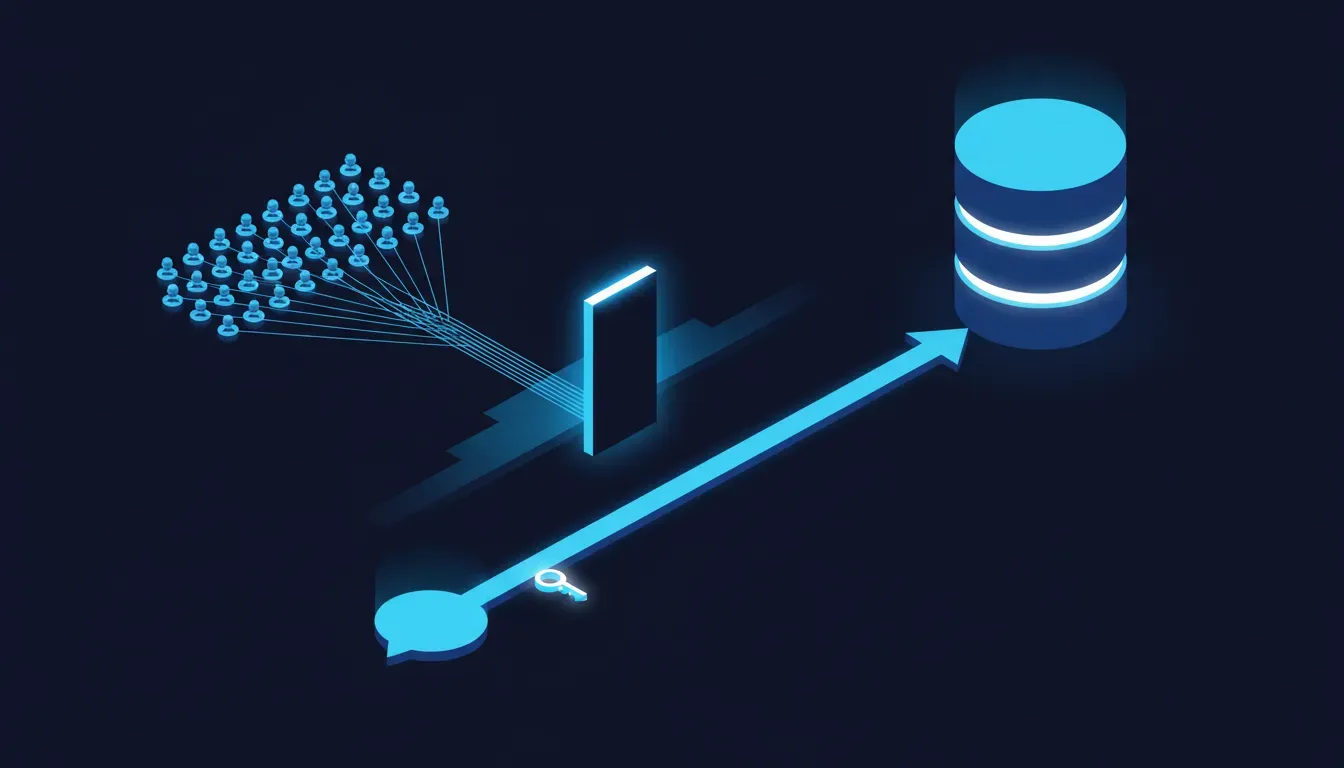
Because of one line in the onboarding description that is written as a feature and reads, to anyone who has run an access review, as something else entirely. Setting this up requires an admin to authenticate once. After that, permissions are managed centrally and sellers get access from day one, with no per-user setup. Read that as a product decision and it is a good one — per-user OAuth flows are where enterprise rollouts go to die, and Salesforce is right that removing them is why adoption will actually happen. Now read the same sentence as a description of your exposure. One person, on one afternoon, grants a consent whose blast radius is your entire revenue team, on a surface most of your existing monitoring was never pointed at. Nothing about that is a vulnerability, nobody is being attacked, and there is no bug to patch. It is simply the case that the size of the decision and the size of the ceremony around it have come apart, and the ceremony is the smaller of the two.
Whose claims these are
Everything above comes from Salesforce, announced by Salesforce, on a Salesforce earnings call, about a partnership Salesforce has a direct commercial interest in. That includes the claim we think is genuinely the most important in the announcement: that Claude is the first large language model provider fully integrated inside the Salesforce Trust Boundary, and that actions route back through Salesforce so business rules are enforced when an action is taken. We have no independent verification of what that boundary covers in practice, and neither does anyone else outside the pilot. We are repeating it because it is specific and checkable rather than because it is neutral, and because if it holds up it is the difference between this and the parade of AI tools that quietly copy your data somewhere you cannot see it. Ask your account team what the boundary covers, in writing, before September. "Fully integrated within our trust boundary" is a sentence that should survive one follow-up question, and if it does not, that is your answer.
Is this different from the AI tools that already crept into your stack?
Yes, and in a direction that mostly favours it. We have written before about the AI notetaker nobody approved — the class of tool that arrives because an employee signed up, holds a token nobody recorded, and appears on no inventory. This is close to the opposite of that. It arrives through your existing vendor, on your existing contract, with central permission management, an audit story and an enforcement path back through Salesforce's own rules engine. If your realistic alternative is a salesperson pasting account notes into a consumer chat app on their phone — and for a great many mid-market sales teams, that is the actual status quo rather than a hypothetical — then this is straightforwardly the better outcome, and the governed path existing at all is the win. The reason we are still writing about it is narrower than "AI is risky", and worth stating precisely: your permission model in Salesforce was built and tested for a world where asking a hard question of the CRM was expensive. Someone had to build a report, or know where to click. A chat interface makes asking free. Roles and sharing rules that were technically correct but practically never exercised are about to be exercised constantly, by people who no longer need to know what a report is. Nothing is misconfigured. The configuration is just about to be load-tested for the first time.

The two conclusions that both get this wrong
The first wrong conclusion is "block it until we have a policy". This fails for a boring, predictable reason: the demand it addresses is real, the alternative your team will reach for is a consumer chat app with no boundary at all, and a blanket block converts a governed path into an ungoverned one while letting you believe you have solved something. Every business we have watched do this has ended up with more AI touching its customer data, not less, and less visibility into it. The second wrong conclusion is the mirror image and it is the more common one: "it is inside the Salesforce Trust Boundary, so it is handled". A trust boundary governs where your data is processed and under whose controls. It does not govern who is allowed to ask, what they are allowed to see once they have asked, or whether your sharing rules from 2021 still reflect who should see whose pipeline. Those are your settings, not Anthropic's and not Salesforce's, and this is the change that puts weight on them. Both readings make the same error in opposite directions: treating a well-designed access route as either a threat to be blocked or a decision that has been made on your behalf, when it is neither.
What would we actually do before the September beta?
- Decide, on purpose, who owns the admin consent. Right now the answer in most companies is "whoever happens to click it". Name the person, and make the grant a decision with two people in the room rather than a checkbox at the end of an upgrade. This costs nothing and is the single highest-value item on this list.
- Re-read your Salesforce sharing and field-level security as if every person could ask any question in plain English, because in September they can. Pay particular attention to compensation fields, margin and cost data, account owner history, and anything in a custom object that somebody added quickly during a quarter-end. The question is not whether access is technically correct. It is whether it is correct when it is easy to use.
- Ask your account team, in writing, three things: what data the Salesforce Trust Boundary claim actually covers for this integration, whether prompts and responses are retained and where, and what an administrator can see after the fact about who asked what.
- Check whether Slack becoming Claude-backed by default touches an obligation you have already made. If you have told customers, an auditor or a procurement questionnaire which model providers process your data, a default swap inside Slack is a change to that answer even though nothing on your side moved.
- Pilot it narrowly and deliberately. One team, a fixed window, and a named person reviewing what it was actually asked at the end. The value of a pilot here is not proving the tool works — it will — but discovering which of your permission assumptions were wrong while the group is small enough to fix them.
- Keep the human approval step on anything that writes. Reading pipeline is a permissions question. Updating records, sending external mail or changing a forecast is a different class of action, and the fact that it routes through Salesforce's rules engine is a reason to trust the mechanism, not a reason to remove the person.
- Write down what you decided and why. In twelve months somebody will ask when your CRM became reachable from a chat product and who approved it. The answer being a dated paragraph rather than a shrug is most of what governance actually is.
The genuinely encouraging part
The direction of travel here is good, and it is worth saying so clearly in a year when most AI news is a breach or a broken promise. Two large vendors with a strong commercial interest in doing the flashy thing instead spent their announcement talking about trust boundaries, central permission management and routing actions back through a rules engine so business logic still applies. That is the unglamorous plumbing that determines whether AI in a business is an asset or an incident, and it is being built into the default path rather than sold as a premium tier. It also puts a mid-market company on genuinely equal footing with a large enterprise for once: the controls arrive in the product, so the constraint is no longer budget or a dedicated security team, it is whether somebody spent an afternoon deciding how their own permission model should work. That is an afternoon any business can afford. The ones that will be embarrassed in a year are not the companies that adopted this early. They are the companies that clicked accept during an upgrade and never went back to look.
Where we fit
We will be honest about what the hard part is, because it is not the integration — that part is genuinely a few clicks, and that is precisely the problem. The hard part is that answering "who should be able to ask our CRM anything, in plain English, from a chat window" requires somebody who understands both your commercial structure and your permission model, and most growing businesses have one of those people or the other but not both in the same head. That gap is exactly what a Fractional Head of AI and Digital is for. Retaining JTS on this means somebody senior sits between your Salesforce admin and your leadership team and turns a vendor timeline into your decision: we review your sharing rules and field-level security against the new reality that questions are now free to ask, we put the admin consent behind a named owner and a real approval, we get you specific written answers from your vendors about retention and boundaries instead of marketing sentences, and we scope a narrow pilot that tells you which assumptions were wrong while it is still cheap to find out. Then we keep doing it, because Claudeforce is one of roughly a dozen of these arriving this year, and the businesses that stay in control are not the ones with the strictest policy. They are the ones where somebody is actually reading the release notes.
Sources
- Salesforce — Salesforce and Anthropic Announce Claudeforce (the primary announcement, 26 August 2026: the three directions of the partnership, Claude as the default model across Slack, the Salesforce in Claude plugin with 37 prebuilt sales skills, the Salesforce Trust Boundary claim, and the pilot-now / open-beta-September timing)
- Salesforce — Salesforce and Anthropic bring trusted business context and AI actions to Claude through Slack and Agentforce 360 (the product detail behind the announcement, including how actions route back through Salesforce so business rules are enforced)
- Salesforce Ben — Salesforce and Anthropic announce Claudeforce in Q2 '27 earnings (independent coverage, the onboarding description quoted above — one admin authentication, permissions managed centrally, access from day one with no per-user setup — and the named example skills)
- The Next Web — Salesforce is putting Claude at the centre of its products, and itself inside Claude (independent coverage of the two-way nature of the deal, useful for understanding why this is a surface change rather than only a model change)
- JTS Tech Services — AI agents just showed up inside your team's tools. Now what? (the general version of this problem, which this is a specific dated instance of — worth reading first if the whole category is new to you)
- JTS Tech Services — The AI notetaker nobody approved (the ungoverned alternative this is being compared against, and why a governed path existing at all is the win)
- JTS Tech Services — Your AI agents are anonymous traffic inside your own SaaS stack (the inverse failure: agents with no identity at all, rather than one correct identity with a very wide reach)